Around 30 minutes to 1 hour for a photo stop, or longer if you stay for sunset, the midnight sun or the northern lights.
✅ Worth it if
You want one of Lofoten's most photogenic beaches — a broad sweep of white sand under a dramatic mountain wall, with mirror reflections on the wet sand — and free parking right at the beach.
⚠️ Skip if
You're mainly after swimming or sunbathing — the water is cold, the beach is often windy, and its real draw is the scenery and photography rather than a beach day.
Generate your personalised Norway locations for free
Every place in Norway you'd actually want to see — in under 2 minutes.
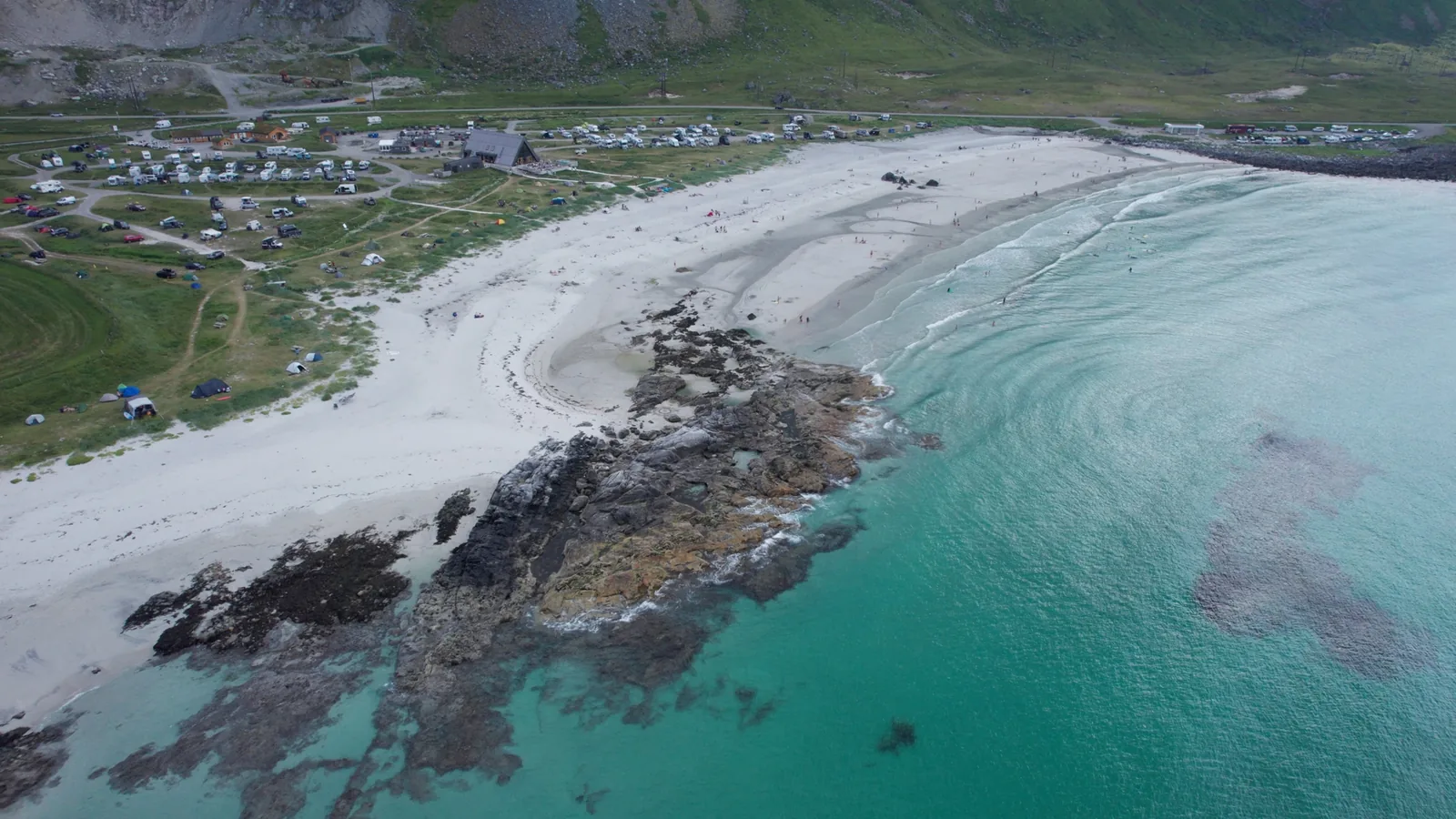
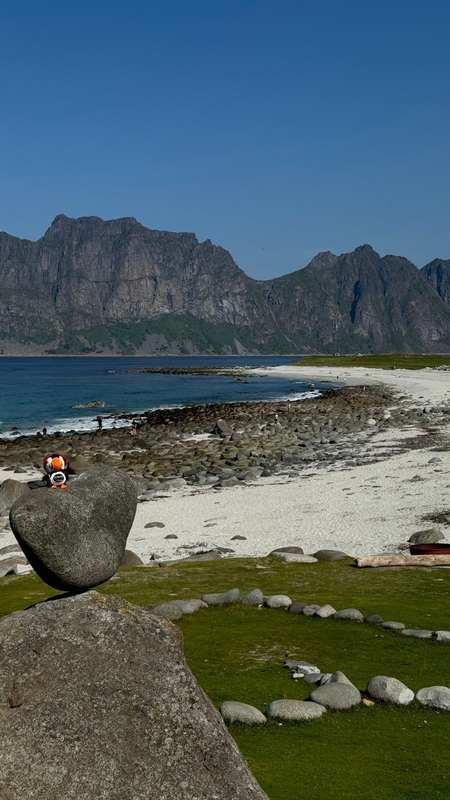
Skagsanden (Skagsanden strand) is a wide white-sand beach near Flakstad on the island of Flakstadøya, in Lofoten, northern Norway. It is one of the most photographed beaches in the islands — a broad, flat sweep of sand under a steep mountain wall, where the wet sand mirrors the peaks and sky on a falling tide. That reflection, plus an open western horizon for sunsets and the northern lights, is what draws photographers from all over the world.
How do I get to Skagsanden Beach, and where do I park?
Skagsanden sits right beside the E10, the main Lofoten road, near Flakstad — about a 35–40 minute drive west of Leknes. There is a car park directly at the beach with toilets and a picnic area, and it is free — one of the few free big-name beach car parks in Lofoten. The access road is cleared in winter, and it is a one-minute walk from the parking over the dunes to the sand.
Why is Skagsanden so good for photography?
The beach is broad, flat and open, with a dramatic mountain backdrop, and the firm smooth sand holds a thin film of water as the tide recedes — creating mirror reflections of the peaks and sky. Streams crossing the sand add natural leading lines. It works in almost any light, from soft overcast to golden evening sun, the midnight sun, or the aurora in winter. For the best mirror, come on a falling tide in calm air.
Can you see the northern lights at Skagsanden?
Yes — in the dark season, roughly late September to mid-March, Skagsanden is one of the better-known northern-lights beaches in Lofoten. The open northern sky, the mountain wall as a foreground, and the lack of light pollution make it a strong aurora spot on a clear night. Dress very warmly, bring a tripod, and watch your footing on the dark, often icy sand.
Can you swim at Skagsanden Beach?
You can go in, but it is not really a swimming-and-sunbathing beach. The water is cold — around 14 °C in early July and colder the rest of the year — and the beach is open and often windy. Some Arctic surfers ride the waves here. Most visitors come for the scenery and photography rather than a beach day; if you do paddle, keep younger children back from the shore break when it is windy.
Is there camping at Skagsanden Beach?
The beachside car park is free and campervan-friendly for a stop, with toilets and a picnic area, but it is not a formal campsite — follow any posted signs and local rules on overnight stays, which vary by season. For a proper overnight base there are organised campsites and rorbu accommodation in and around Flakstad and nearby Ramberg, only a few minutes away along the E10.
How long should you spend at Skagsanden, and when is the best time?
Most visitors stop for 30 minutes to an hour — a quick photo and a leg-stretch on the drive through Lofoten, made easy by the free parking right at the sand. It rewards a longer visit if you time it for a falling tide (best reflections), sunset and the low western light, the midnight sun in summer, or a clear aurora night in the dark season. Summer is mildest; winter is dramatic but cold and windy.
Can you surf at Skagsanden Beach?
Yes — Skagsanden is one of the main surf beaches in Lofoten, alongside Unstad, and the more beginner-friendly of the two. It is a clean sand-bottom beach break (no hidden rocks or reef), with shifting sandbanks that throw up left and right peaks, and it works best on winter windswell from the west and north. The water is cold all year, so you need a 5–6 mm wetsuit with hood, boots and gloves. Lofoten Beach Camp, right on the dunes, runs a surf school with lessons and rentals — making Skagsanden one of the easiest places in Lofoten to catch your first Arctic wave. It's a surf beach rather than a kitesurfing spot.
What is the church next to Skagsanden Beach?
That is Flakstad Church (Flakstad kirke), in the village of Flakstad right beside the beach — a red wooden church from 1780 with a distinctive onion-domed turret, and one of the oldest churches in Lofoten. It sits a couple of minutes from the beach car park, so it is easy to see both in one stop.
About Skagsanden Beach
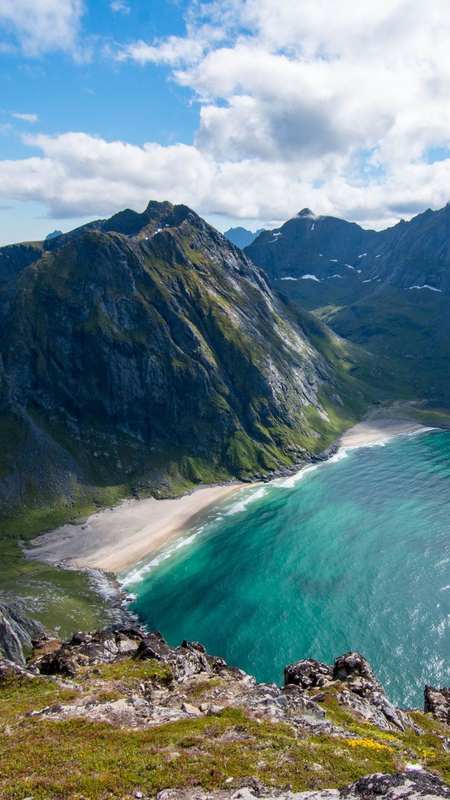
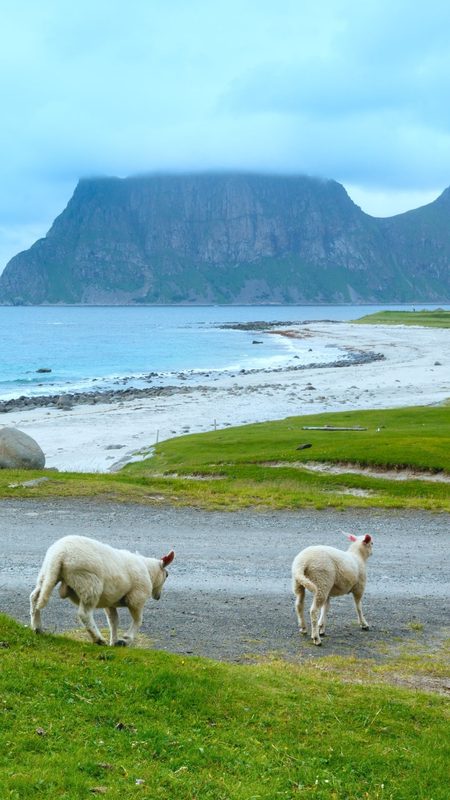
Skagsanden Beach (Skagsanden strand) is one of the most photographed beaches in Lofoten — a wide, open arc of pale sand near the village of Flakstad on the island of Flakstadøya, backed by a steep wall of mountains and facing the open sea. It is flatter and more exposed than the famous Haukland–Uttakleiv pair on Vestvågøy, and that openness is exactly what photographers come for: when the tide pulls back over the smooth sand, the wet beach turns into a mirror that reflects the peaks and the sky.
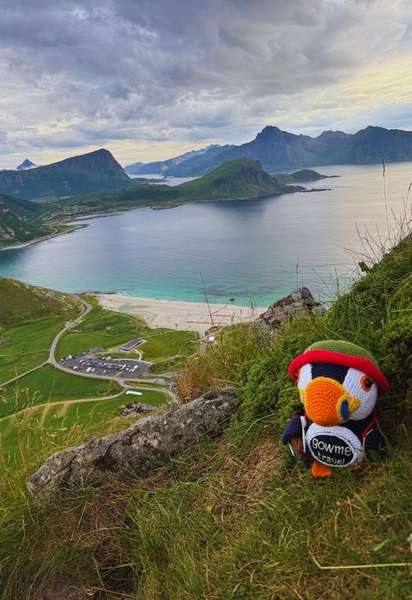
Our own footage from Skagsanden — the wide beach and the mountain wall that make it one of Lofoten’s best photo spots.
How to get there and parking
Skagsanden sits right beside the E10, the main Lofoten road, near Flakstad — roughly a 35–40 minute drive west of Leknes. There is a car park with a picnic area and toilets directly at the beach, and — unusually for the big-name Lofoten beaches — it is free. The road in is cleared in winter. From the car park it is a one-minute walk over the dunes to the sand.
Why photographers go to Skagsanden
Skagsanden's appeal is the composition. The beach is broad and flat, the mountain backdrop is dramatic, and the firm, smooth sand holds a thin film of water as the tide recedes — giving the mirror reflections that fill Lofoten photography portfolios. Streams crossing the sand add S-curves and leading lines. It works in almost any light: soft overcast, golden low sun, the pink of the midnight-sun hours, or the green of the aurora overhead in winter. Many of the most-shared Lofoten beach images are taken here.
Surfing at Skagsanden
Alongside Unstad, Skagsanden is one of the main surf beaches in Lofoten — and the more beginner-friendly of the two. It is a clean sand-bottom beach break with no hidden rocks or reef, and shifting sandbanks create a mix of left and right peaks that suit longboarders and improvers as well as shortboarders. The bay is a swell magnet, picking up winter windswell from the west and north; the biggest, most consistent waves come in the cold months. As everywhere in Arctic Lofoten the water is cold year-round, so you need a proper cold-water setup — a 5–6 mm wetsuit with hood, boots and gloves. On a clear winter night it is even possible to surf under the northern lights here.
The surf hub on the beach is Lofoten Beach Camp, right on the dunes — a surf school with lessons and rentals, a restaurant, and accommodation from camping pitches to beach cabins. If you want to try Arctic surfing for the first time, Skagsanden with a Lofoten Beach Camp lesson is one of the easiest places in the islands to start. (It is a surf beach rather than a kitesurfing spot — for wind sports Lofoten has other, more exposed bays.)
Best light and conditions
For reflections, come on a falling tide when the sand is freshly wet but not flooded — check a tide table. Calm, still air gives the cleanest mirror. The beach faces roughly west, so it catches sunset and the low evening light beautifully. In the dark season (roughly late September to mid-March) Skagsanden is one of the better-known northern-lights beaches in Lofoten, with the mountains as a foreground and little light pollution.
Weather and wind exposure
The flip side of that openness is wind. Skagsanden is exposed to Atlantic weather and can be very gusty — blowing sand is common, so protect your camera gear and bring a windproof layer. The water is cold (around 14 °C in early July, colder otherwise); some Arctic surfers ride here, but it is not a swimming-and-sunbathing beach in the usual sense.
Quick stop or longer visit
Most visitors treat Skagsanden as a 30-minute-to-an-hour photo and leg-stretch stop on the drive through Lofoten — easy because the parking is free and right at the sand. It rewards a longer visit if you time it for sunset, the midnight sun, or a clear aurora night, when the beach comes into its own.
Camping and where to stay
For an overnight stay right at the beach, Lofoten Beach Camp sits on the dunes at Skagsanden with camping pitches, beach cabins and a restaurant (it doubles as the surf school). In the high season, indicative nightly prices (two people included) run from around 300 NOK for a tent, 360 NOK for a tent + car, 400 NOK for a van or rooftent, 430 NOK for a motorhome (530 NOK over 8 m) and 450 NOK for a caravan + car, plus about 60 NOK for 16A electricity; extra adult ~50 NOK, ages 12–18 ~25 NOK, under-12s free, with check-out before 12:00. Rates change by season, so confirm on the Lofoten Beach Camp site. The beachside day car park is free and campervan-friendly for a stop, with toilets and a picnic area, but for sleeping over use the camp or follow the local rules on overnight parking. There are also more campsites and rorbu accommodation in and around Flakstad and Ramberg, a few minutes away along the E10.
Flakstad Church next to the beach
Right beside Skagsanden, in the village of Flakstad, stands Flakstad Church (Flakstad kirke) — a red wooden church from 1780 with a distinctive onion-domed turret. It is a couple of minutes from the beach car park, and the red church against the white sand and mountains makes an easy extra photo stop.
Skagsanden pairs naturally with the rest of the Flakstad–Ramberg stretch and the wider Lofoten loop: the historic fishing village of Nusfjord is close by, and the famous beaches of Haukland and Uttakleiv, the surf at Unstad, and the villages of Reine and Hamnøy are all along the same route.
9-day weather forecast — Skagsanden Beach, Ballstad
Loading forecast…
⚡ Mountain weather changes fast. This is an automated forecast from MET Norway — not a personal recommendation. Check yr.no and use your own judgement before you head out.
Did you know?
Skagsanden is one of the most photographed beaches in Lofoten — the wet sand acts as a mirror for the mountains on a falling tide.
Its beachside car park, with toilets and a picnic area, is free — unusual among the big-name Lofoten beaches.
In the dark season Skagsanden is a well-known northern-lights beach, with the mountain wall as a natural foreground.
Flakstad Church, right beside the beach, is a red wooden church from 1780 with an onion dome — the second-oldest church in Lofoten, built largely from Siberian driftwood.
Skagsanden is one of Lofoten's main surf beaches — a clean sand-bottom beach break, and with Lofoten Beach Camp on the dunes it is the most beginner-friendly place to try Arctic surfing.
Practical tips
Parking: free car park with toilets and a picnic area right at the beach — one of the few free big-name beach car parks in Lofoten. The access road is cleared in winter.
Photography: come on a falling tide for the mirror reflections on the wet sand; calm air gives the cleanest mirror. The beach faces west — great for sunset and low evening light. Protect your gear from blowing sand.
Wind and weather: Skagsanden is open and exposed; it can be very windy. Bring a windproof, waterproof layer.
Water: cold (around 14 °C in early July). Arctic surfers ride here, but it is not a swimming-and-sunbathing beach. Keep younger children back from the shore break in wind.
Northern lights: in the dark season this is one of the better aurora beaches in Lofoten — open northern sky, mountain foreground, little light pollution.
Fluffy™ Norway Trip Planner is built for one thing: turning a messy "somewhere in Norway" idea into a clear route you can actually follow. Tell Fluffy when you're traveling, who you're with, how active you want to be – and the planner curates a custom mix of fjords, viewpoints, easy walks and bigger adventures.
Whether you're starting with classic Oslo attractions and day trips from Oslo, flying to Bergen for some Bergen sightseeing, or chasing the northern lights around Tromsø, Bodø, Narvik or Alta, the planner connects it all into one route. Road-tripping through western Norway around Aurland, Gudvangen, Loen, Olden, Voss and Stryn? Hopping between islands in Lofoten – Svolvær, Leknes, Å i Lofoten, Henningsvær, Hamnøy? Or mixing cities like Stavanger, Trondheim, Kristiansand and Lillehammer with quiet fjord villages? Fluffy keeps the puzzle pieces in order.
After five quick steps, you get a personalized map of Norway with recommended places across northern, western and southern Norway – sent straight to Google Maps. Open it on your phone, tick off spots as you go, and adjust on the fly. You bring the curiosity; Fluffy brings the map.