Nusfjord — Historical Fishing Village in Lofoten, Norway
One of Norway's oldest and best-preserved historical fishing villages, in Lofoten.
Nusfjord


One of Norway's oldest and best-preserved historical fishing villages, in Lofoten.
Every place in Norway you'd actually want to see — in under 2 minutes.
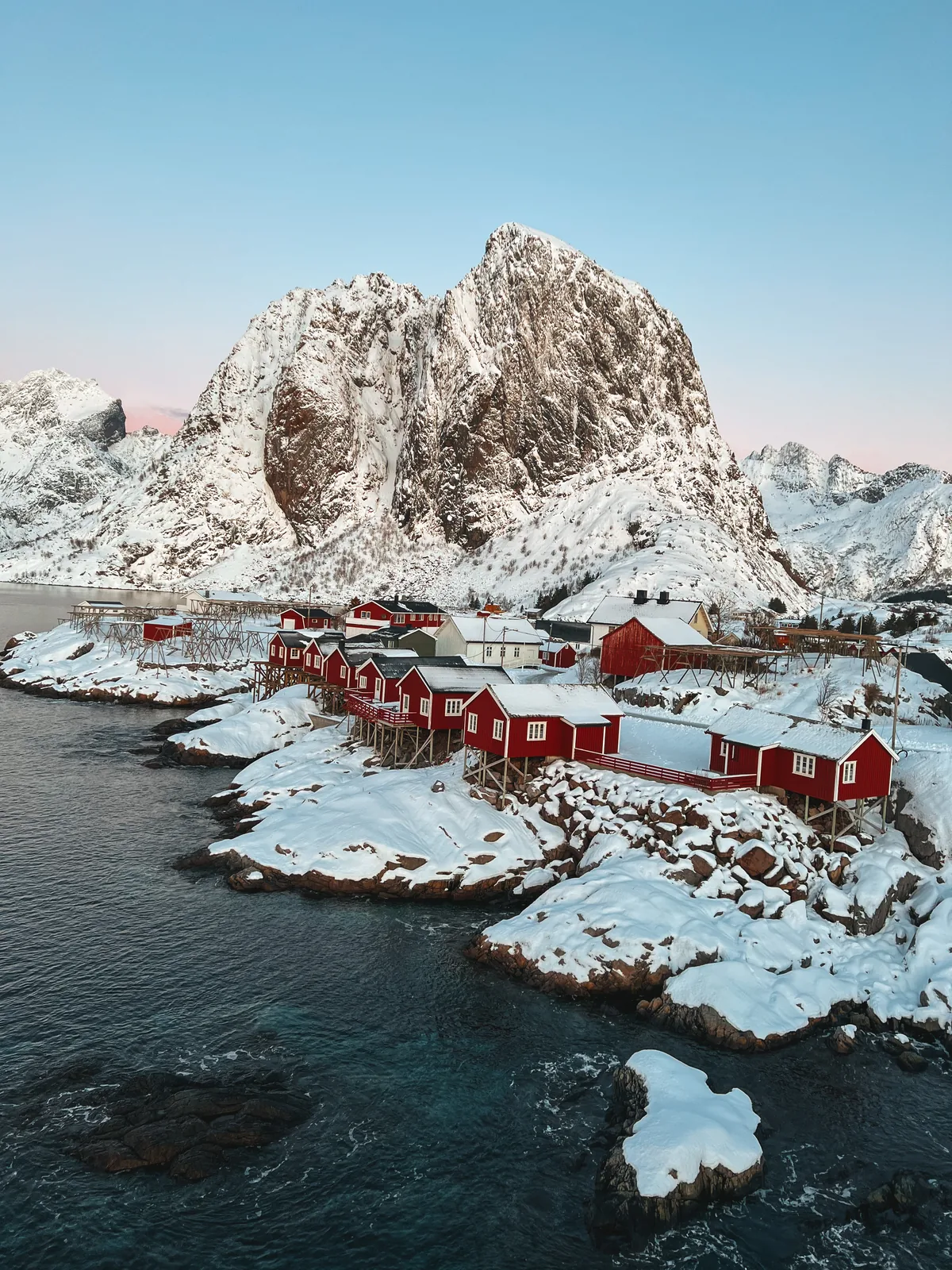
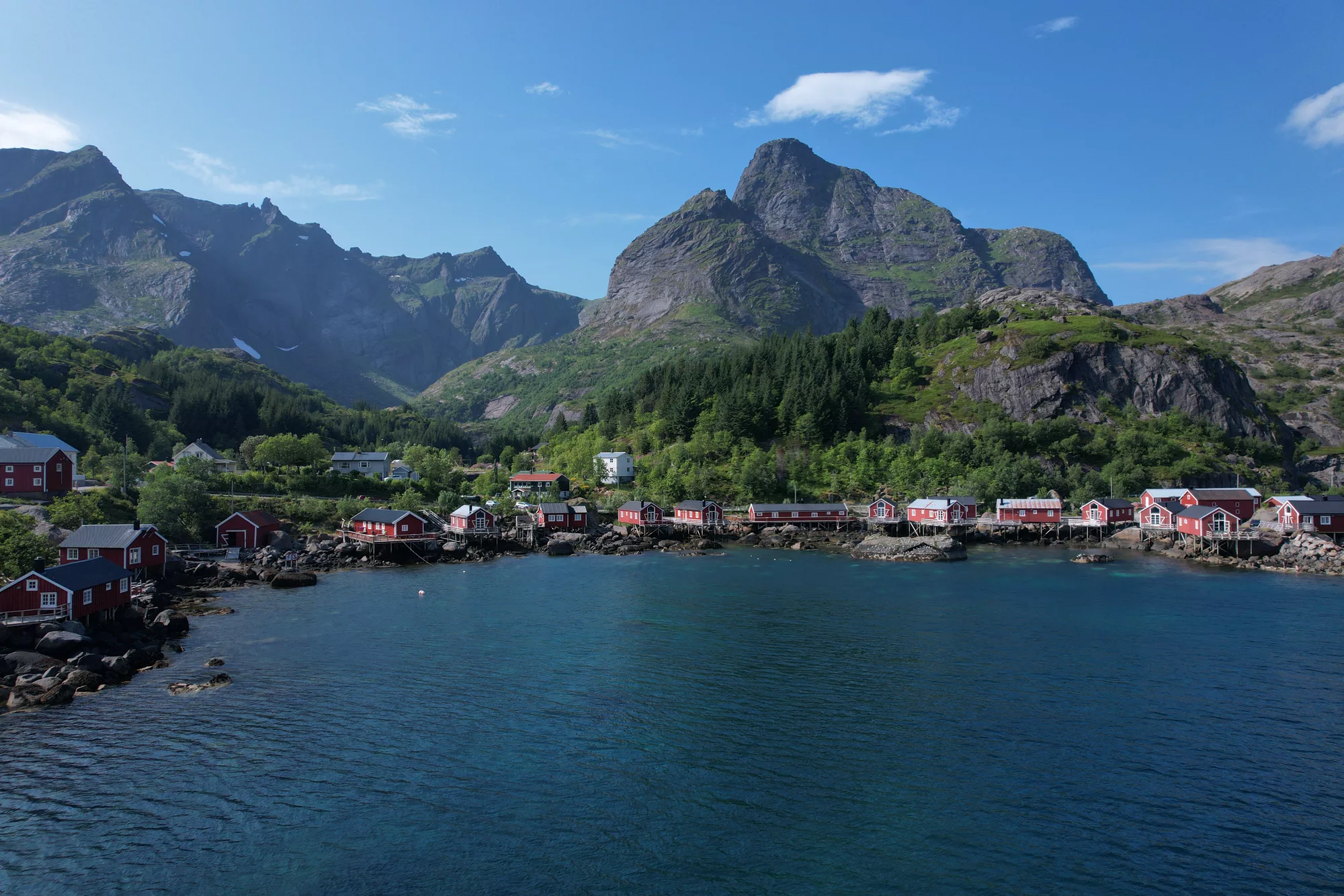
Generate free locationsNusfjord is one of the oldest and best-preserved fishing villages in Norway — a small cluster of red and ochre wooden buildings around a tiny natural harbour on Flakstadøya, in Lofoten. It grew up around the Lofoten cod fishery and still has its original rorbuer (the cabins built over the water for visiting fishermen), general store, bakery and quay. It is famous partly for how complete it is: in 1975, during UNESCO's European Architectural Heritage Year, Nusfjord was picked as one of just three Norwegian pilot projects for heritage preservation, and it remains a genuine working village rather than a museum.
In the summer season Nusfjord charges an entrance fee — around 100 NOK per person — collected at the entrance to the village. If you only want a brief taste of the atmosphere, it is possible to visit the café without paying that entry fee. Be aware, though, that this is not an official or guaranteed alternative to a ticket: it lets you reach the café, and it does not entitle you to walk around the village as a paying visitor would. Outside the main summer months the fee is usually not collected at all, and the viewpoint and lighthouse walks around the village are free either way.
There is a car park just outside the village, a two-minute walk from the harbour, and parking there is free. Do, however, use only the marked spaces and follow the signs — the area is monitored in the busy season and a badly parked car can be fined. Campervans can use the same car park; in autumn and winter you may also be allowed to drive further in toward the museum.
The village itself is the main attraction — wander the quaysides, look into the old general store, and see the red rorbuer up close. There is a small fishing museum, and a short walk out along the shore brings you to a Whale Museum, with the path continuing to the little Nusfjord lighthouse at the mouth of the fjord. A short, easy uphill walk reaches the Fotopoint, the panoramic viewpoint over the whole village, and the Mellomvatnet trail loops gently around the lakes just above Nusfjord. Leave time simply to sit with a coffee and watch a working harbour go about its day.
Summer, roughly June to August, is when everything is open — the museum, café and shops — and the midnight sun keeps the harbour lit late into the night; it is also the busiest time and when the entrance fee applies. Spring and autumn are quieter and the village is still lovely. In winter Nusfjord is very quiet, the entrance fee is usually not collected, and on a clear night it is a sheltered, beautiful spot to watch the northern lights — but check what is open before you go.
Yes. Nusfjord is compact, mostly flat and easy to walk, so it suits families well — children can see the boats, the rorbuer and the harbour with no real walking effort. The fishing and whale museums add interest on a wet day. The one thing to watch is the open quaysides and water's edge, which have few barriers, so keep younger children close. The short walk up to the Fotopoint viewpoint is manageable for most children.
Most visitors spend one to two hours in Nusfjord; with the museum, the viewpoint walk and a stop at the café it easily becomes half a day. You can also stay the night — many of the historic rorbuer are now rented as accommodation, so you can sleep in a fishermen’s cabin right over the water and have the village largely to yourself once the day visitors have left.
Yes. Nusfjord is one of the best places in Lofoten to experience a preserved fishing village up close, not just from a viewpoint or roadside stop.
You get access to one of Lofoten's best-preserved fishing-village settings, with the harbor area, historical atmosphere, museum context, and the chance to walk through the village properly. Food and drinks at the café are extra.
Yes. If you are already in Lofoten in winter, Nusfjord is still worth visiting for the atmosphere, photography, quiet surroundings, and panoramic coastal scenery.
Yes, if you book accommodation there. Staying in a rorbu overnight is one of the best ways to experience the village after most day visitors are gone.
Nusfjord is one of the oldest and best-preserved fishing villages in Norway — a tight cluster of ochre-and-red wooden buildings wrapped around a tiny natural harbour on the south coast of Flakstadøya, in the Lofoten islands. It is small, almost impossibly picturesque, and it has the rare quality of feeling like a real place rather than a reconstruction: this is a working historical fishing village with a long, unbroken story, not an open-air museum.
The village grew up around the Lofoten cod fishery. For centuries fishermen rowed in here each winter for the seasonal catch, and through the boom years of the late 19th and early 20th century Nusfjord filled with everything a fishing station needed — rorbuer (the red cabins built out over the water for visiting fishermen), a general store, a bakery, a cod-liver-oil factory, a sawmill, and a quay lined with drying racks. Much of it is still standing, and much of it still works. In 1975, during UNESCO's European Architectural Heritage Year, Nusfjord was singled out as one of just three Norwegian pilot projects for the preservation of historic buildings — which is why it has survived so completely intact.
Today most people come simply to walk around and take it in. The classic view of Nusfjord — the rorbuer, the harbour, the steep mountains closing it off from the open sea — is one of the most photographed scenes in Lofoten. You can wander the quaysides, look into the old general store, visit the little fishing museum, and watch the village go about its day. The rorbuer are now also rented out as accommodation, so Nusfjord is at once a heritage site, a small harbour hotel, and a still-living fishing village.
One thing to know before you go: in summer Nusfjord charges an entrance fee — around 100 NOK per person — collected at the entrance to the village. The café can be visited without paying that entry fee, so if you only want a quick sense of the atmosphere a coffee there is an option. It is not, however, an official substitute for a ticket, and it does not entitle you to walk around the village as a paying visitor would. Outside the main summer season the fee is usually not collected at all.
There is more to do than the village core. A short, easy uphill walk leads to the Fotopoint, the panoramic viewpoint that frames the whole village, harbour and fjord in a single shot. Walking the other way, out along the shore, you pass the Whale Museum and can carry on all the way to the small Nusfjord lighthouse at the mouth of the fjord. For a gentle leg-stretch, the Mellomvatnet trail loops around the lakes just above the village, with no real climbing. There is also a steeper path up the mountainside behind the car park for anyone who wants a viewpoint hike — check conditions locally before heading up.
Practical basics are simple. The car park sits just outside the village and parking is free — but use only the marked spaces and follow the signs, as the area is monitored and a badly parked car can be fined. From the car park it is a two-minute walk down into the village. Most visitors spend one to two hours here; with the museum, the viewpoint and a coffee by the harbour, it easily turns into half a day.
Nusfjord rewards an unhurried visit: come for the rorbuer, stay for the quiet, and let one of Norway's most complete historical fishing villages set the pace.
Entry fee: in summer Nusfjord charges about 100 NOK per person at the village entrance. The café can be visited without paying that entry fee — fine if you only want a quick coffee and a glimpse of the place — but this is not an official alternative to a ticket and does not cover walking around the village. Off-season the fee is usually not collected.
Parking: the car park just outside the village is free. Use only the marked spaces and follow the signs — the area is monitored and a badly parked car can be fined.
Getting around: the village is small and easy to walk, but the quaysides and old wooden surfaces get slippery when wet, so wear comfortable shoes with grip. The water's edge is largely unfenced — keep younger children close.
Time and facilities: there is a café, a gift shop and toilets on site. Allow one to two hours for the village, or half a day with the museum, the Fotopoint viewpoint and the walk toward the lighthouse.
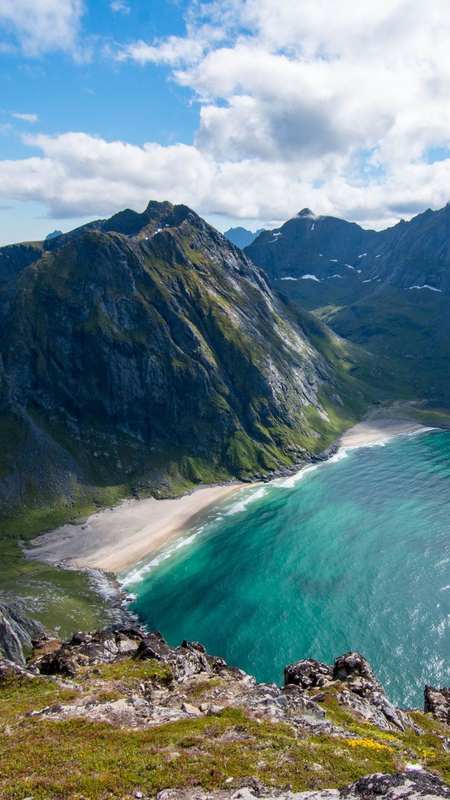
Combining the trip: Nusfjord pairs well with other Lofoten stops nearby — the beach hike to Kvalvika Beach and Ryten and the Sherpa-stair climb up Reinebringen are both an easy drive away.
Nordland · 8.2 km away
View guide →

Northern Norway · 12.1 km away
View guide →

Nordland · 13.0 km away
View guide →

Northern Norway · 15.6 km away
View guide →

Northern Norway · 16.5 km away
View guide →

Nordland · 19.7 km away
View guide →
Fluffy™ Norway Trip Planner is built for one thing: turning a messy "somewhere in Norway" idea into a clear route you can actually follow. Tell Fluffy when you're traveling, who you're with, how active you want to be – and the planner curates a custom mix of fjords, viewpoints, easy walks and bigger adventures.
Whether you're starting with classic Oslo attractions and day trips from Oslo, flying to Bergen for some Bergen sightseeing, or chasing the northern lights around Tromsø, Bodø, Narvik or Alta, the planner connects it all into one route. Road-tripping through western Norway around Aurland, Gudvangen, Loen, Olden, Voss and Stryn? Hopping between islands in Lofoten – Svolvær, Leknes, Å i Lofoten, Henningsvær, Hamnøy? Or mixing cities like Stavanger, Trondheim, Kristiansand and Lillehammer with quiet fjord villages? Fluffy keeps the puzzle pieces in order.
After five quick steps, you get a personalized map of Norway with recommended places across northern, western and southern Norway – sent straight to Google Maps. Open it on your phone, tick off spots as you go, and adjust on the fly. You bring the curiosity; Fluffy brings the map.