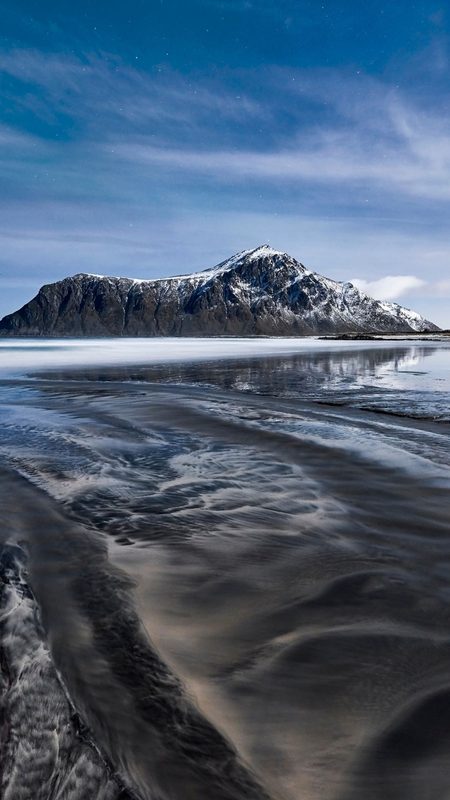
Reine, Lofoten — Norway's Iconic Fishing Village
One of Norway's most photographed fishing villages — red rorbuer around the Reinefjord, in Lofoten.
Reine


One of Norway's most photographed fishing villages — red rorbuer around the Reinefjord, in Lofoten.
Every place in Norway you'd actually want to see — in under 2 minutes.
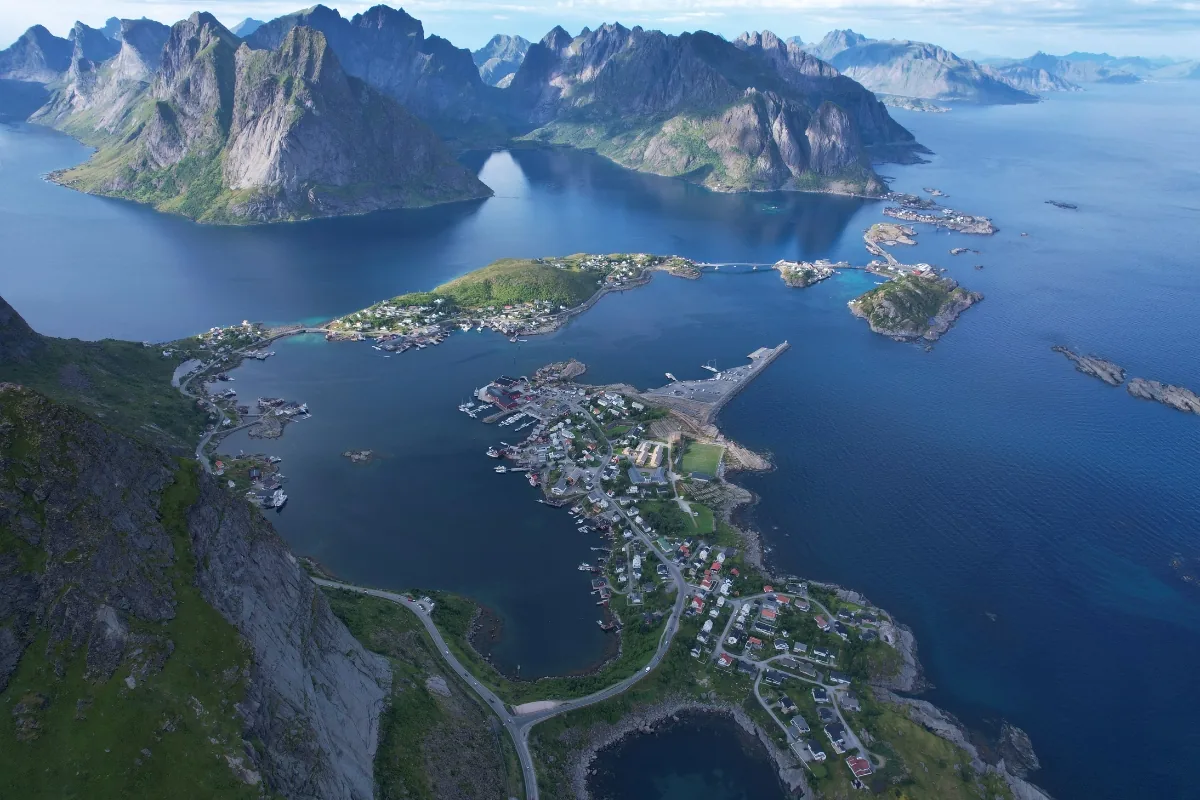
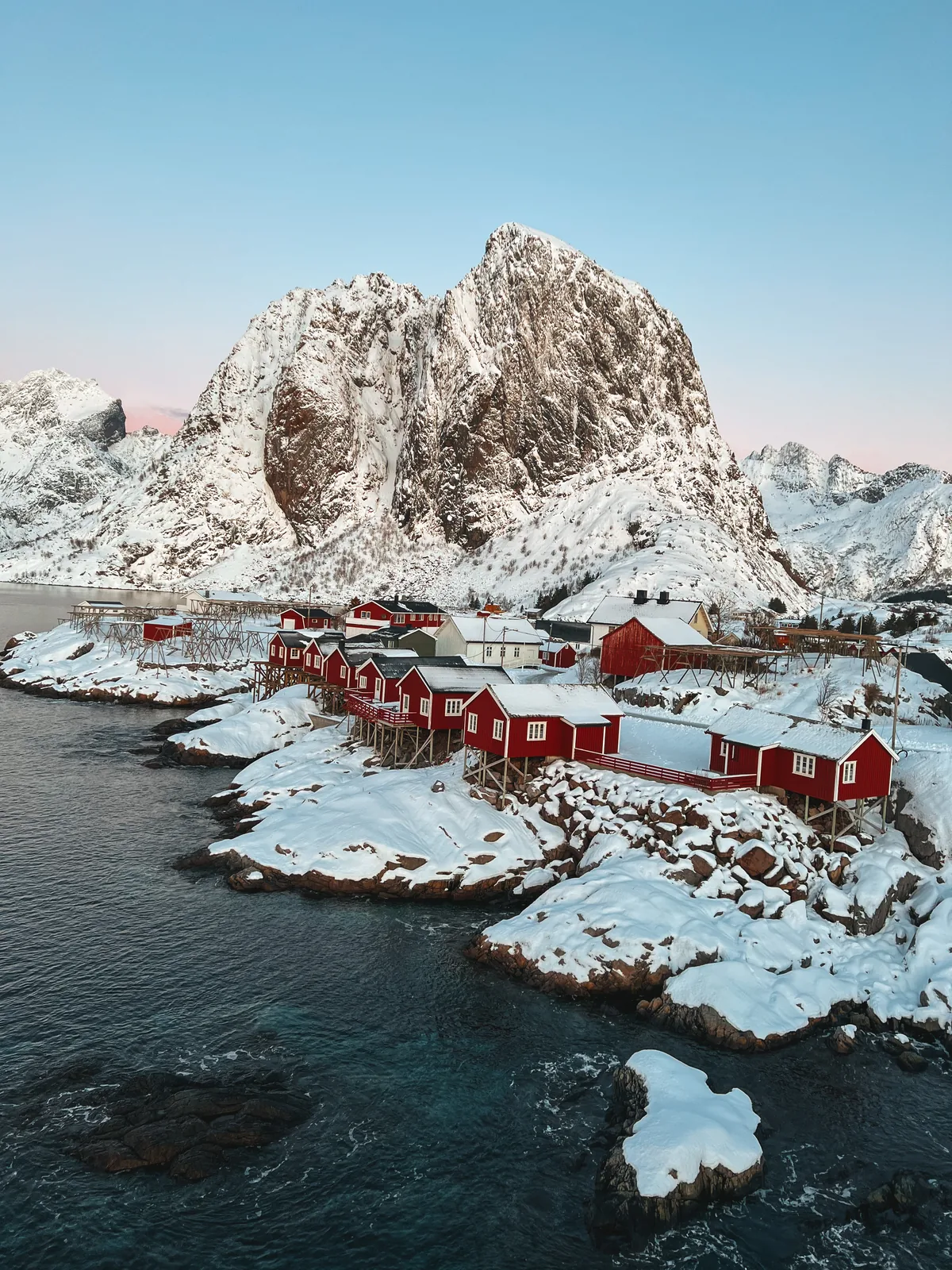
Generate free locationsReine is a small fishing village in Lofoten, northern Norway, set on islets at the mouth of the Reinefjord on the island of Moskenesøya. Only around 300 people live there, but it is one of the most photographed places in the country — famous for the combination of red rorbuer (traditional fishermen's cabins) over the water, the calm fjord, and the wall of sharp granite peaks behind. It is regularly listed among the most beautiful villages in the world.
Reine is small, so the village itself is the first thing — wander the harbour, the church and the fish-drying racks, and stop at a café or the art gallery. The classic photo is taken from the Reine Photo Point, a short walk up from the village. From Reine you can also kayak the Reinefjord, take a boat across to the wild Bunes and Vindstad beaches, and climb Reinebringen, the famous Sherpa-stair hike on the mountain directly above the village. In the dark season it is a fine, sheltered place to watch the northern lights.
Yes — and it is the classic Reine experience. The red rorbuer, originally built over the water for visiting cod fishermen, are now rented as accommodation by several operators in and around the village. Sleeping in a rorbu on the Reinefjord, with the peaks outside the window, is one of the iconic places to stay in Lofoten. Demand is very high, so book months ahead for the summer season.
Reine has a central car park, a short flat walk from everything in the village. It is paid — around 40 NOK per hour, with a brief free grace period — and it fills up early on summer days, so come first thing in the morning if you can. There is no charge to visit the village itself; only the parking costs money.
Reine is beautiful year-round, and it depends what you want. Summer (June to August) brings the midnight sun, the liveliest atmosphere and every café and boat trip open — but also the crowds and the parking squeeze. Late autumn and winter are quiet and atmospheric, and Reine is one of the better-sheltered spots in Lofoten to watch the northern lights on a clear night, though some services close. Spring and early autumn are a good middle ground.
Yes. Reine is compact, flat and easy to walk, so it suits families with no real effort — children can see the boats, the rorbuer and the drying racks, and there are cafés for a break. The main thing to watch is the open harbour edges and the water, which are mostly unfenced, so keep younger children close. The walk up to the Photo Point is short; the Reinebringen hike above the village is a serious stair climb and a separate decision.
Reine sits right on the E10, the main road through Lofoten, near the western end of the island chain — about an hour's drive from Leknes and its airport, or roughly ten minutes from the Moskenes ferry terminal that connects to Bodø. Most visitors arrive by car or campervan; there is also a bus along the E10. The village is the natural base for the far-western corner of Lofoten.
Yes, absolutely. Reine is worth visiting even without the hike. The village, harbor, rorbuer, fjord views, and overall atmosphere already make it one of the most memorable stops in Lofoten.
Without doing Reinebringen, the best views come from different points around the village, including the bridge area and the Reine Photo Point. For the most dramatic overall panorama, though, Reinebringen is still the top viewpoint.
Yes. They are close to each other and easy to combine in the same trip, so it makes sense to see both rather than choosing only one.
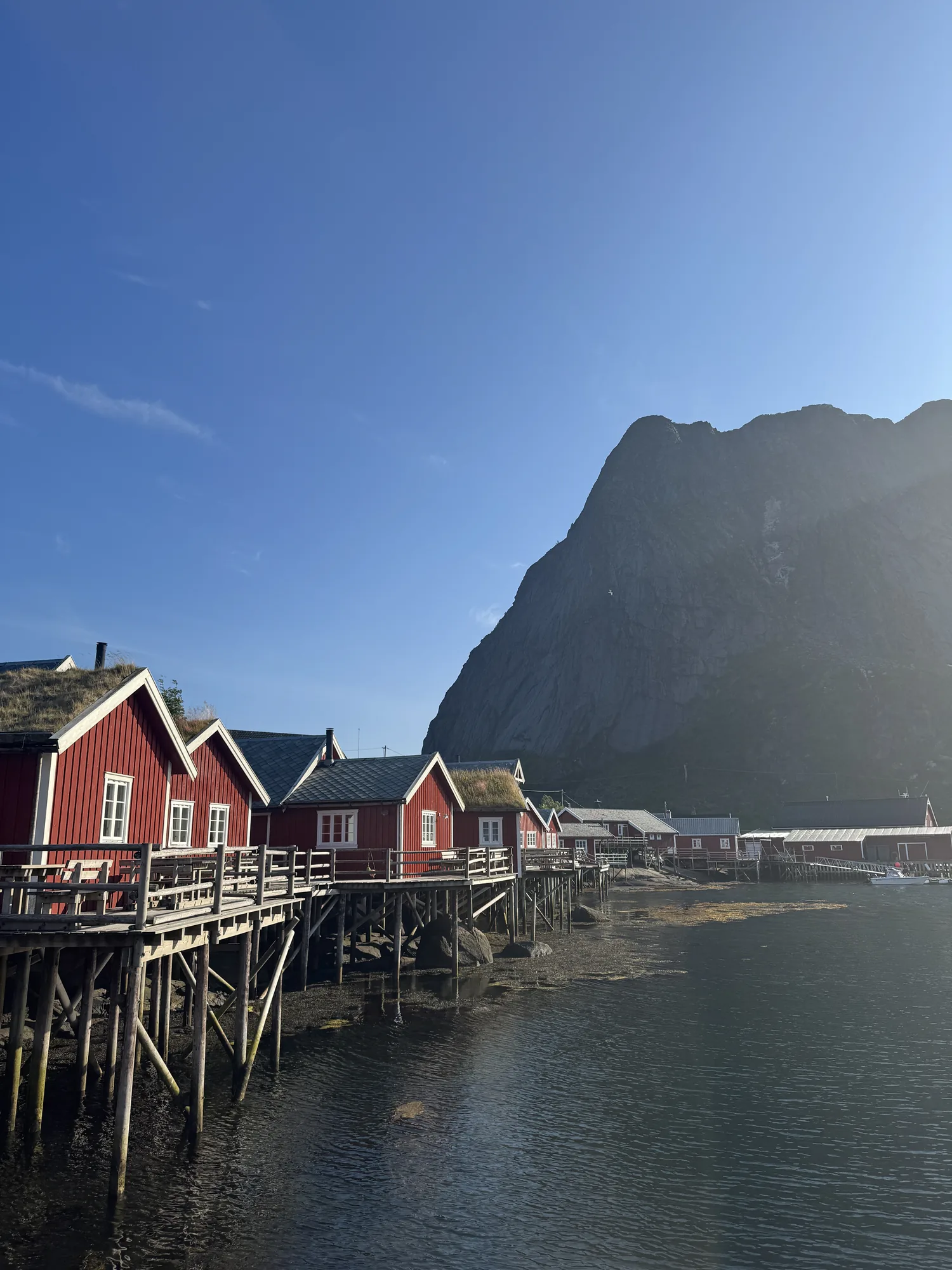
Reine is the village most people picture when they think of Lofoten — and often when they think of Norway itself. It sits on the island of Moskenesøya, spread over small islets at the mouth of the Reinefjord, with red and white rorbuer (the traditional fishermen's cabins) standing over the water and a wall of sharp granite peaks rising straight behind them. Barely 300 people live here, yet Reine is regularly named one of the most beautiful villages in the world.
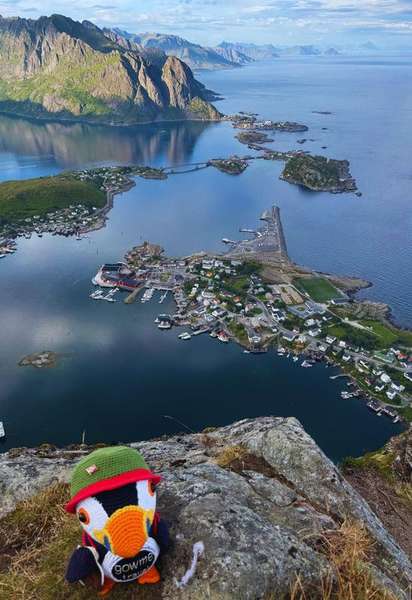
What makes Reine so famous is the composition: the red cabins, the still water of the Reinefjord, and the jagged mountains, all in one frame. It is one of the most photographed scenes in Norway. The classic shot is taken from the Reine Photo Point, a short walk up from the village, or from the bridge on the E10 — both give you the whole village laid out below. For the really high view, the mountain Reinebringen rises directly above Reine, and its Sherpa-stair hike is one of Lofoten's best-known climbs.
There is more to Reine than the photograph. The village itself is small and easy to wander — a harbour, a church, a couple of cafés and restaurants, an art gallery, and the fish-drying racks that still hang with stockfish in late winter and spring. You can kayak out onto the calm Reinefjord, take a boat trip toward the wild Bunes and Vindstad beaches, or simply sit by the water with a coffee. In summer the midnight sun keeps the village glowing past midnight; in the dark months Reine is a quiet, sheltered spot to watch the northern lights.
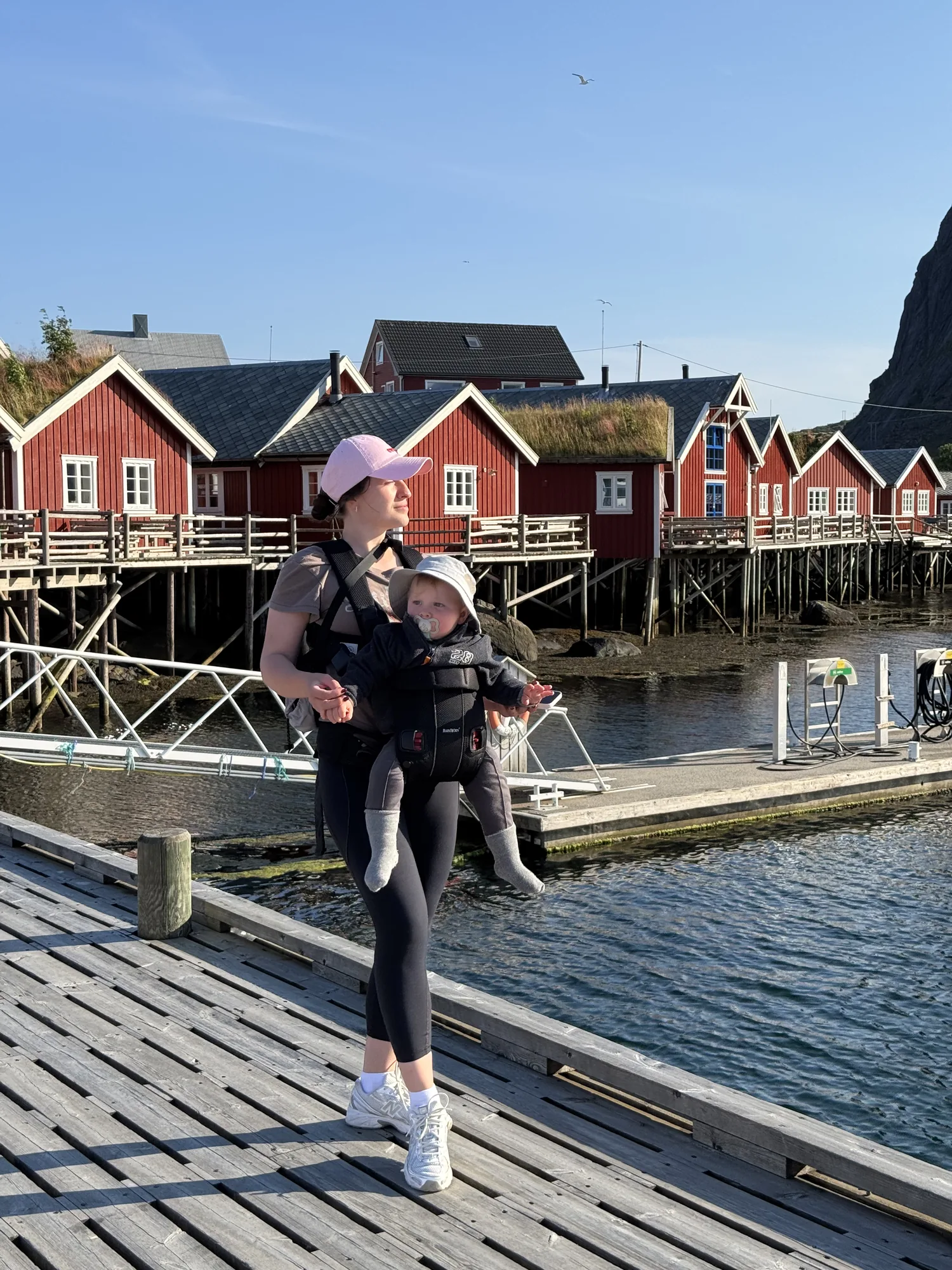
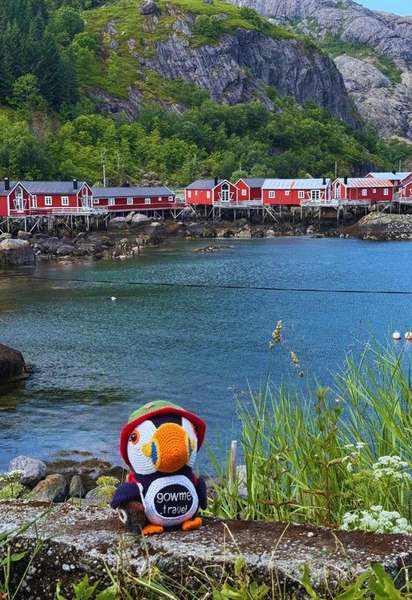
The rorbuer are the heart of Reine. Originally built over the water as seasonal lodging for visiting cod fishermen, the red cabins are now one of the iconic places to stay in Lofoten — sleeping in a rorbu on the Reinefjord, with the mountains outside the window, is the classic Reine experience. Several rorbu operators rent cabins in and around the village; book well ahead for summer, as Reine's accommodation fills months in advance.
Reine is easy to reach — it sits right on the E10, the main Lofoten road, about an hour from Leknes. Parking is the one thing to plan: the village is tiny and the central car park is paid (around 40 NOK per hour, with a short free grace period), and it fills quickly on summer days, so arrive early. From the car park everything in Reine is a short, flat walk, and there is no charge to visit the village itself.
Reine rewards more than a photo stop. Stay a night in a rorbu, climb to a viewpoint, take the slow boat across the fjord — and one of the most beautiful villages in Norway becomes far more than a picture.
Parking: Reine's central car park is paid — around 40 NOK per hour, with a short free grace period — and it fills early on summer days, so arrive in the morning. From the car park the whole village is a short, flat walk.
Visiting: there is no fee to walk around Reine itself. The village is small; allow an hour or two, longer with a café stop, a boat trip or the Reinebringen climb.
Photo points: the classic view is from the Reine Photo Point (a short walk up from the village) and from the E10 bridge — both are marked on the map above.
Staying over: to sleep in a rorbu on the Reinefjord, book months ahead for summer — Reine's cabins are in high demand.
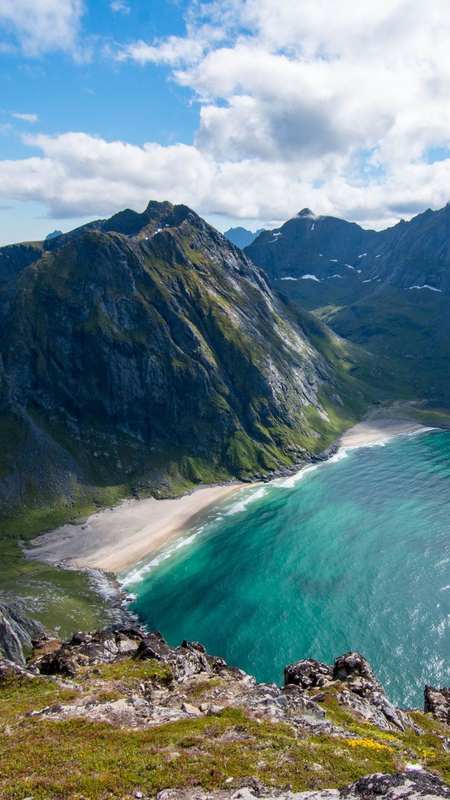
Combining the trip: Reine pairs naturally with the Reinebringen hike straight above the village, and with the Kvalvika Beach and Ryten loop and the historic village of Nusfjord nearby.
Fluffy™ Norway Trip Planner is built for one thing: turning a messy "somewhere in Norway" idea into a clear route you can actually follow. Tell Fluffy when you're traveling, who you're with, how active you want to be – and the planner curates a custom mix of fjords, viewpoints, easy walks and bigger adventures.
Whether you're starting with classic Oslo attractions and day trips from Oslo, flying to Bergen for some Bergen sightseeing, or chasing the northern lights around Tromsø, Bodø, Narvik or Alta, the planner connects it all into one route. Road-tripping through western Norway around Aurland, Gudvangen, Loen, Olden, Voss and Stryn? Hopping between islands in Lofoten – Svolvær, Leknes, Å i Lofoten, Henningsvær, Hamnøy? Or mixing cities like Stavanger, Trondheim, Kristiansand and Lillehammer with quiet fjord villages? Fluffy keeps the puzzle pieces in order.
After five quick steps, you get a personalized map of Norway with recommended places across northern, western and southern Norway – sent straight to Google Maps. Open it on your phone, tick off spots as you go, and adjust on the fly. You bring the curiosity; Fluffy brings the map.