Around 1–2 hours for the beach itself, or longer if you walk over from Haukland, find the Dragon Eye at low tide, or stay for sunset, the midnight sun or the northern lights.
✅ Worth it if
You want one of the wildest, most photographed beaches in Lofoten — boulder-strewn coast, the Dragon Eye rock formation, and the best beach angle on the midnight sun and northern lights in the area.
⚠️ Skip if
You're after warm-weather swimming or full beach facilities — Uttakleiv is wilder than Haukland next door and minimally serviced beyond paid entry, parking and a toilet.
Generate your personalised Norway locations for free
Every place in Norway you'd actually want to see — in under 2 minutes.
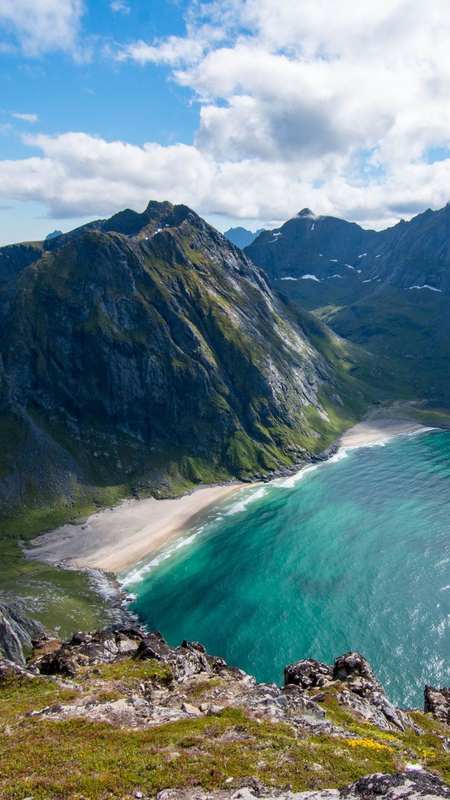
Uttakleiv (Uttakleivstranda in Norwegian) is a wide, wild beach of white sand and smooth-polished boulders on the open Atlantic side of Vestvågøy, in Lofoten, northern Norway. It's famous for three things stacked on the same beach: the Dragon Eye rock formation in the shore boulders, an open north-west horizon that makes it one of the best Lofoten beaches for the midnight sun and the northern lights, and the easy headland walk to its sister beach Haukland next door. Photographers from all over the world come specifically for that combination.
How do I get to Uttakleiv Beach?
From the E10 on Vestvågøy, take the Uttakleivveien turnoff (the same road as Haukland Beach), pass Haukland and continue through a short single-lane tunnel — you arrive at the Uttakleiv entry. From Leknes it's about a twenty-minute drive. Most visitors come by car or campervan. If you're already at Haukland, you can also walk over the headland to Uttakleiv in around 20–30 minutes — a short, popular footpath that lets you see both beaches in one outing.
Where is the Dragon Eye at Uttakleiv, and how do I find it?
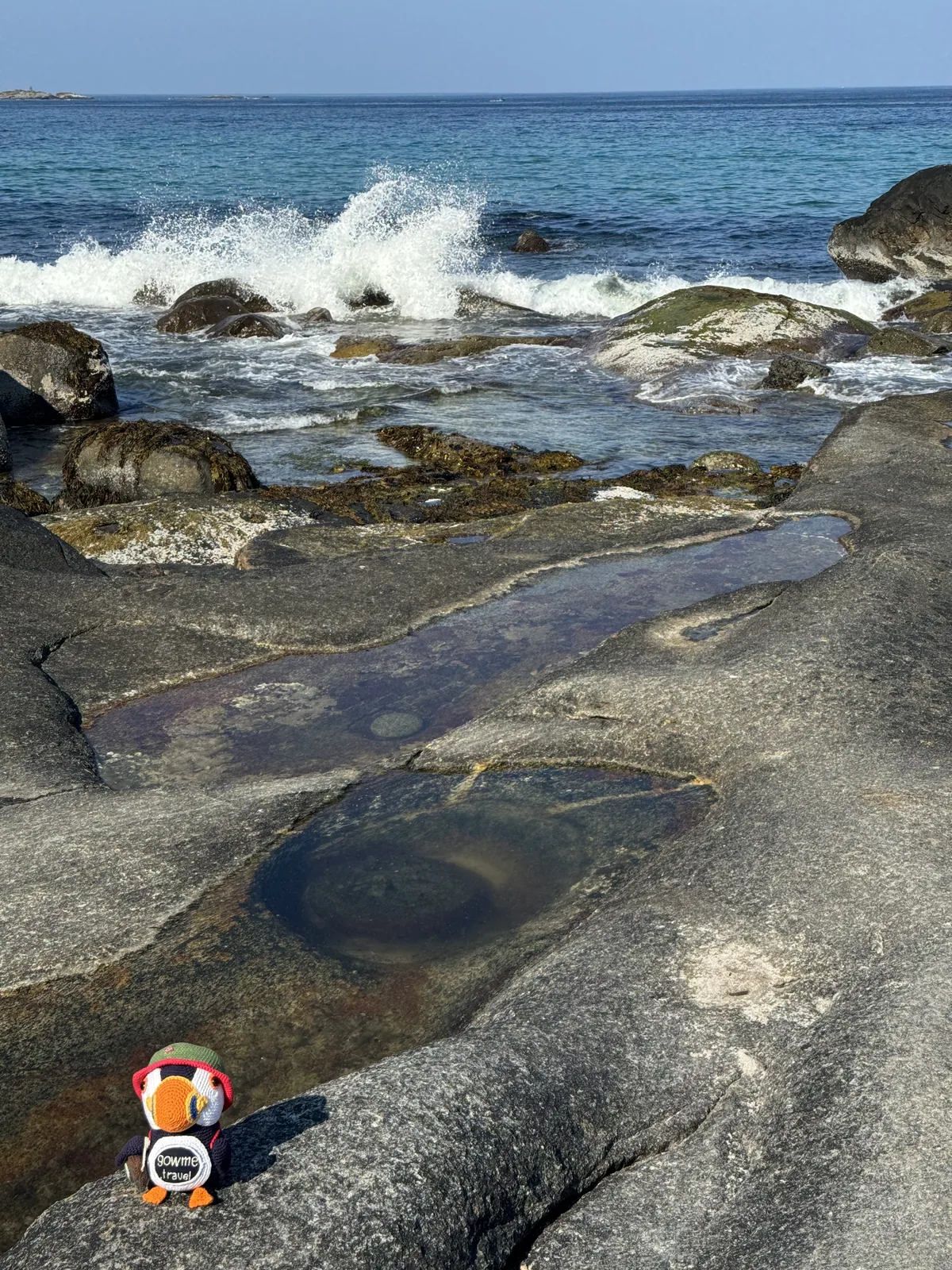
The Dragon's Eye is a natural rock formation at the **south end of the beach**, in the boulders along the shore — a circular, eye-shaped pool worn into a smooth granite slab, with the bay framed behind it as the iris. It is **most visible at low tide**, when the surrounding rocks dry out and the round pool is clearly defined. Check a Lofoten tide table before you come if this is your main reason for visiting. The boulders around it are slippery — go carefully and don't scramble out on a rising tide.
How much does it cost to enter Uttakleiv Beach?
Uttakleiv is on private land, so entry is paid: **around 100 NOK per car** at the gate. That fee **includes parking** inside the paid area — there is no separate hourly meter (different from Haukland Beach next door, which charges by the hour). Day visitors and overnight campers pay the same per-car rate. Park only inside the paid grounds; the road shoulders nearby are patrolled.
Is camping allowed at Uttakleiv Beach?
Yes — there is a marked tent and campervan area inside the paid entry, and camping at Uttakleiv is one of the popular ways to experience the beach for the midnight sun or the northern lights. The 100 NOK per-car entry covers the parking, but check current overnight rates at the gate. The site fills up on summer evenings, so arriving earlier in the day helps. Facilities are limited to a toilet on site — no café, no showers, no shop — so come with water, food and warm layers.
Why is Uttakleiv one of the best photo spots in Lofoten?
Three reasons stacked on the same beach. First, the **boulder foreground** — Uttakleiv's smooth-polished shore rocks make composition straightforward in a way most beaches do not. Second, the **horizon**: it faces almost due north-west onto the open Atlantic with no land or light pollution, which makes it the best beach in the area for both the midnight sun (late May to mid-July) and the northern lights (late September to mid-March on a clear night). Third, the **Dragon Eye** itself — a one-off natural composition you can't find anywhere else in Lofoten. From our own experience: pack a tripod, dress for cold, and plan an evening visit if the Dragon Eye is your main goal — the light is at its best then and the day-trippers are gone.
When is the best time to visit Uttakleiv Beach?
Late May to mid-July for the midnight sun — the sun never sets and the beach is one of the most magical places in Lofoten past midnight. Late September to mid-March for the northern lights on a clear night, with the proviso that the road through the tunnel can be icy in winter. Mid-May to September is the easy practical window for most visitors. Spring and autumn are quieter — the beach has fewer crowds and the light is often at its softest.
How does Uttakleiv compare to Haukland, and should you visit both?
Yes — visit both. They sit on the same headland and are very different. Haukland is the postcard turquoise-water beach with full facilities — paid hourly parking, a café, toilets, showers — and is the gentler, more family-friendly stop. Uttakleiv is wilder and rougher, boulder-strewn instead of soft sand, with only a toilet on site and a fixed entry/parking fee, and it's the better photographer's beach (Dragon Eye, midnight sun, aurora). Most visitors do them on the same day, often with the Mannen hike in between for the combined view of both from above.
About Uttakleiv Beach
Uttakleiv Beach (Uttakleivstranda) is the wilder sister of Haukland — a wide curve of white sand on the open Atlantic side of Vestvågøy, in Lofoten, but framed by huge, smooth-polished boulders, green meadows and a serrated wall of peaks instead of the postcard turquoise bay you get next door. Locals and travel guides often list the two together as a single must-visit pair on the same headland; Uttakleiv is the one that draws photographers.
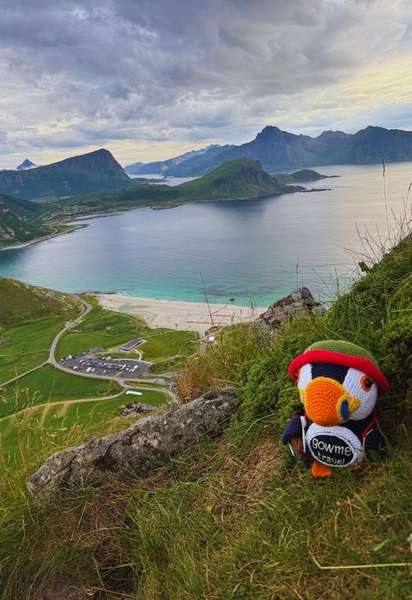
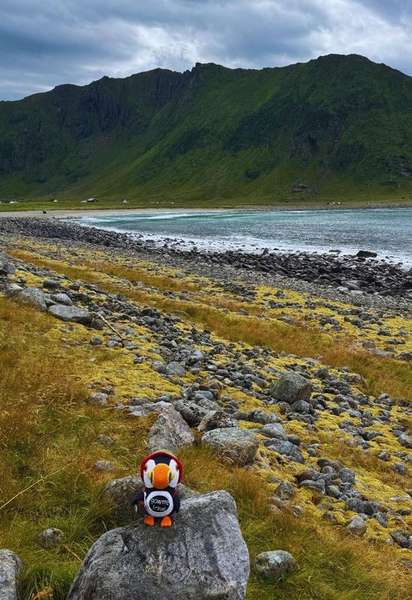
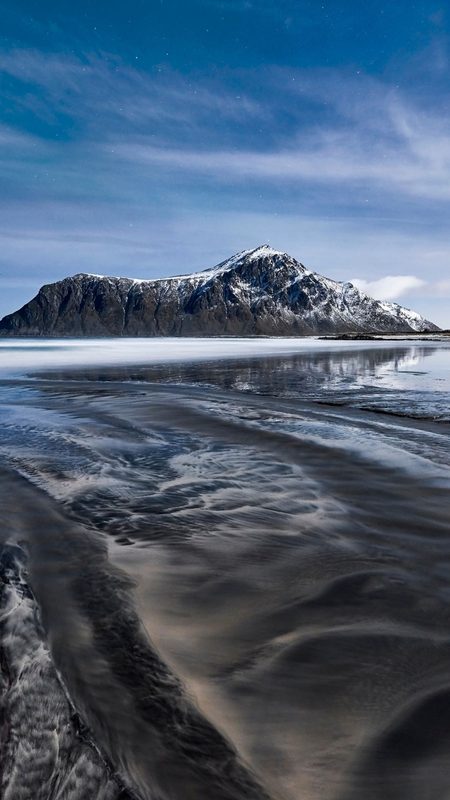
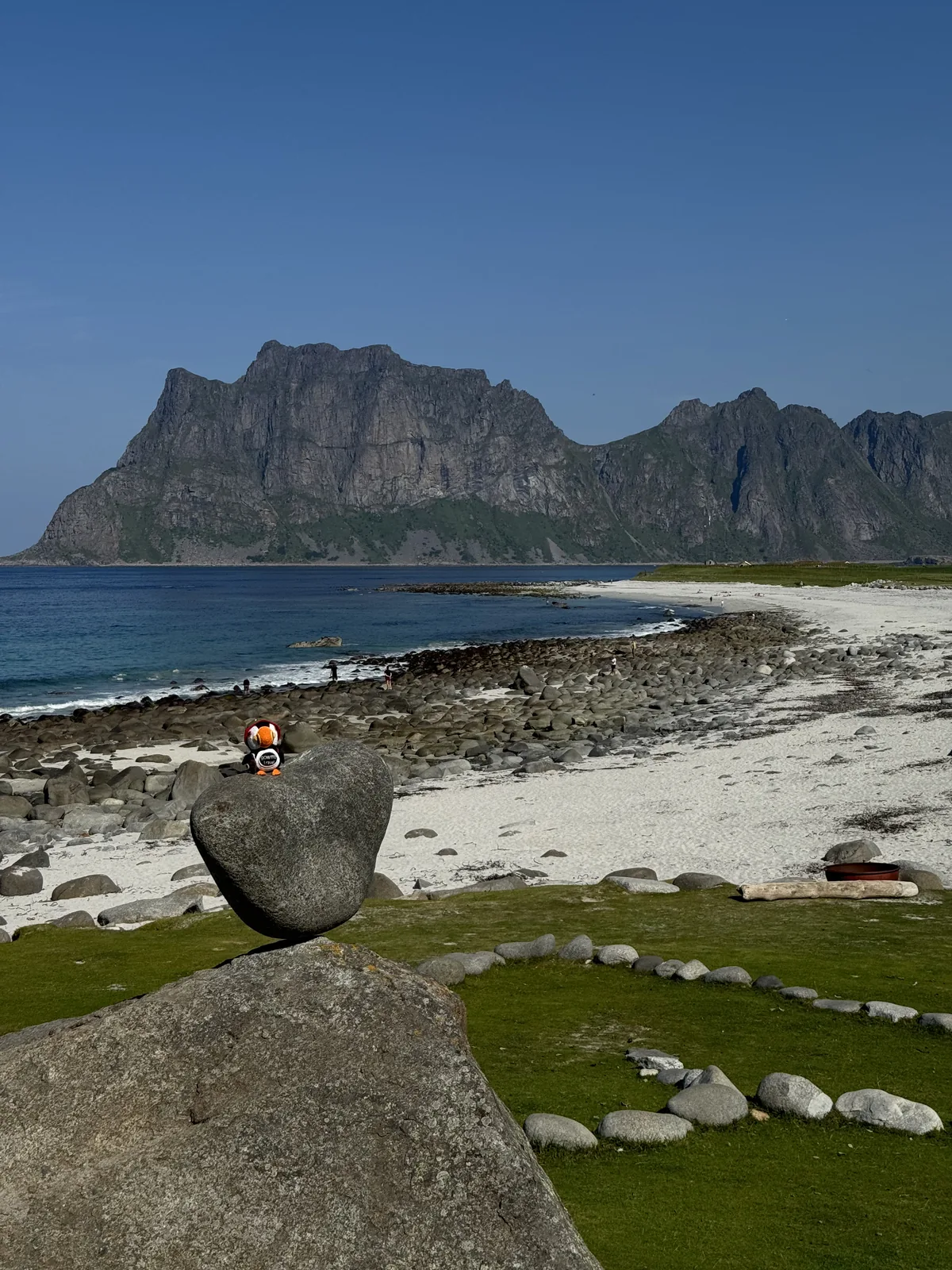
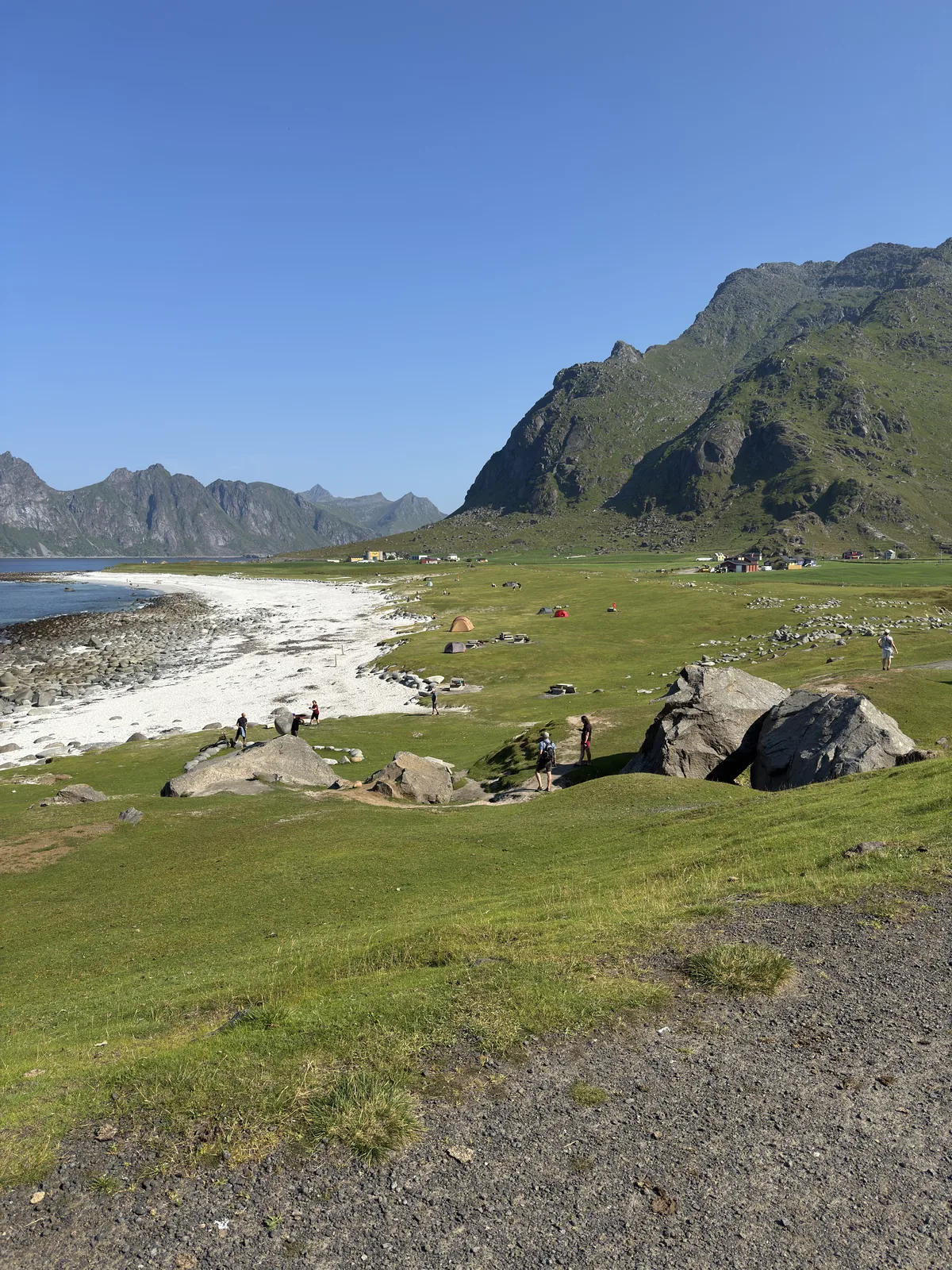
Our own view of Uttakleiv — the wild boulder coast, the camping area by the sand, and the mountains that frame the bay.
Getting there is straightforward. From the E10 main road on Vestvågøy, take the Uttakleivveien turnoff (the same road as Haukland), continue past Haukland Beach and through a short single-lane tunnel, and you arrive at the Uttakleiv entry. From Leknes it's about a twenty-minute drive. If you're already at Haukland, you can also walk over the headland to Uttakleiv in roughly 20–30 minutes — a popular short walk that gives you both beaches in one outing.
Uttakleiv is on private land, so entry is paid: around 100 NOK per car at the gate, and that fee includes parking inside the area (no separate hourly clock). There is a toilet on site, but no café, no showers — bring water, snacks and warm layers, and treat it as a wilder stop than Haukland. The entry-fee model also means the area is patrolled, so park only inside the paid grounds.
The Dragon's Eye is the photo spot that put Uttakleiv on the international photography map. It's a natural rock formation at the south end of the beach where rain and tide pools settle into a circular, eye-shaped impression in a smooth slab of granite, with the bay behind it framing the iris. It is most visible at low tide, when the surrounding rocks dry out and the round pool is clearly defined. Plan your visit with the tide tables if the Dragon Eye is your primary reason for coming — you can find the Dragon's Eye location on the map here.
The Dragon's Eye at Uttakleiv — the circular pool worn into the granite, with the bay framing the iris. Our own photo.
More than the Dragon Eye, Uttakleiv is one of the genuinely best beach spots in Lofoten for the midnight sun and the northern lights. The beach faces almost due north-west onto the open Atlantic with no land or light pollution to break the horizon, and the boulders give photographers a strong foreground for compositions. From late May to mid-July the sun never sets here, and on a clear summer night past midnight the beach is one of the most magical places in Lofoten. In the dark season — roughly late September through mid-March — the same open horizon makes it a top aurora-viewing beach on a clear night.
Camping is one of the popular ways to enjoy Uttakleiv: there is a marked tent and campervan area inside the paid entry, with the toilet and beach a short walk away. The site can fill up on summer evenings, so arriving earlier helps. A practical note: the boulders along the shore are smooth, wet, and slippery — keep children close, mind the tide if you scramble out to the Dragon Eye, and pack a windproof shell even on calm-looking days.
Uttakleiv is best treated as a pair with Haukland Beach and the Mannen viewpoint hike in between — one short loop and you get both beaches from below and the famous combined view from above. It's one of the most rewarding half-days in Lofoten.
9-day weather forecast — Uttakleiv Beach, Leknes
Loading forecast…
⚡ Mountain weather changes fast. This is an automated forecast from MET Norway — not a personal recommendation. Check yr.no and use your own judgement before you head out.
Did you know?
Uttakleiv is one of the most photographed beaches in Lofoten — the combination of the Dragon Eye, the midnight sun and a north-west horizon with no light pollution makes it a year-round photographer favourite.
The Dragon Eye is a natural circular rock formation at the south end of the beach, visible best at low tide.
Uttakleiv is on private land — entry costs about 100 NOK per car and that fee includes the parking inside (different from Haukland's hourly model next door).
Practical tips
Entry and parking: about 100 NOK per car at the entry, and that fee covers parking inside (no separate hourly meter). The area is private and patrolled — park only inside.
Facilities: toilet on site, but no café, no showers, no shop. Bring water, snacks and a windproof layer.
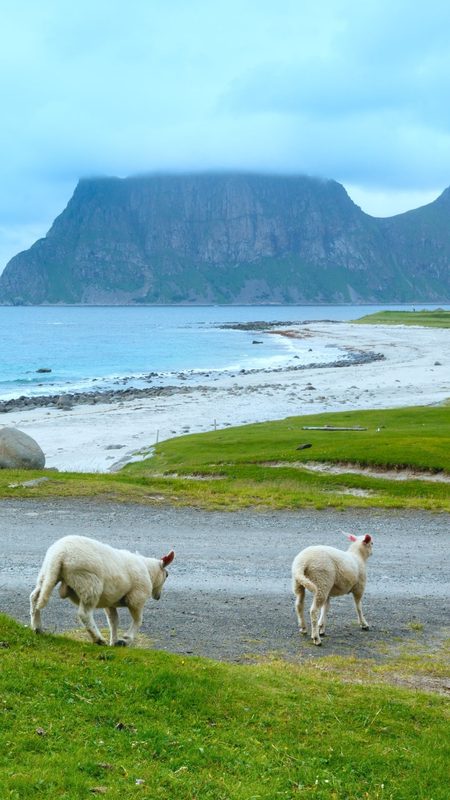
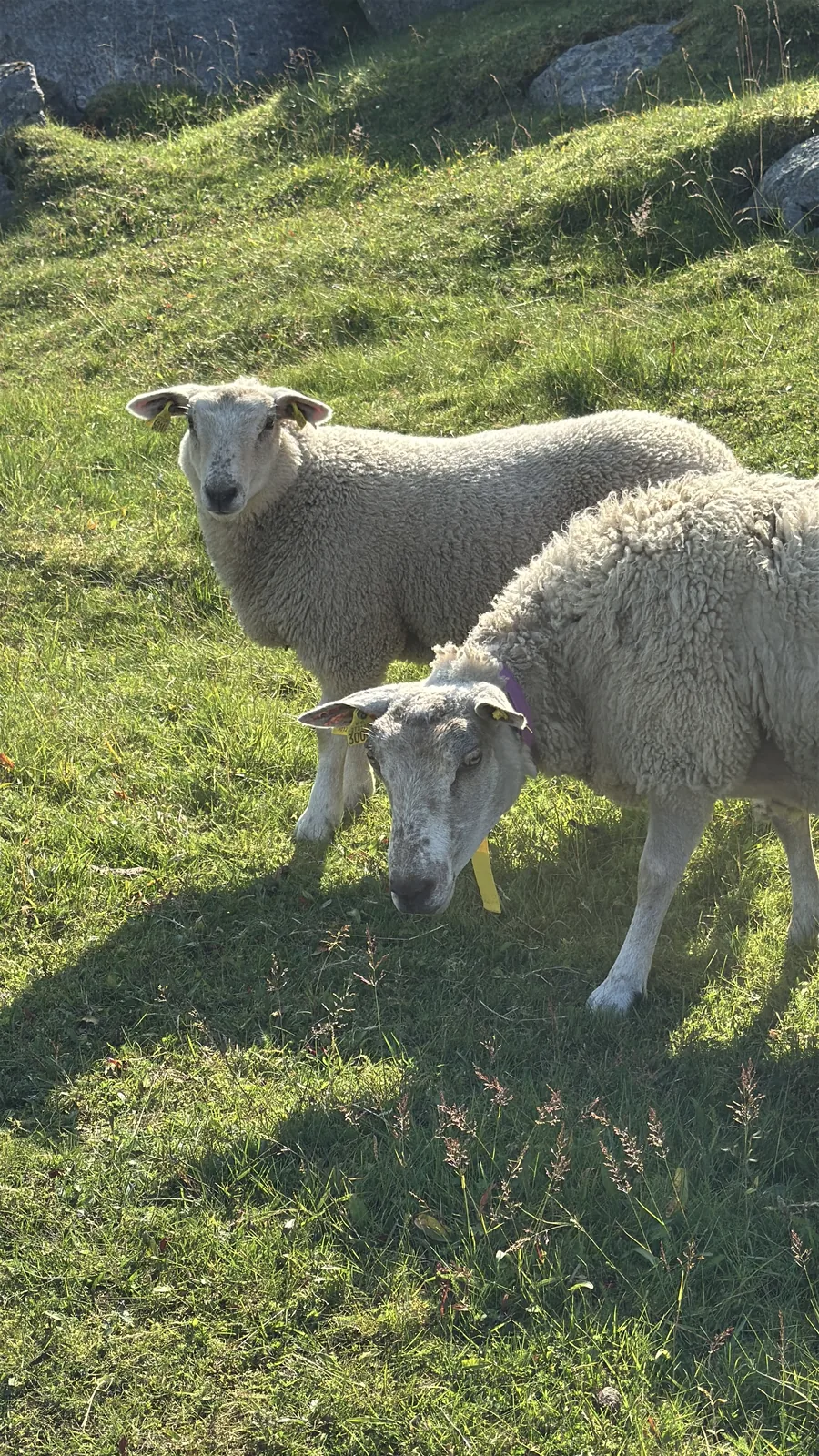
Wildlife: sheep graze freely on the meadows above Uttakleiv through the summer — give them space on the paths and keep dogs on a lead.
Dragon Eye: visible best at low tide at the south end of the beach. Check tide tables before you come if it's your main goal.
Midnight sun and aurora: Uttakleiv is one of the best beach spots in Lofoten for both — open north-west horizon, no light pollution, strong foreground rocks. Bring a tripod.
Safety: the polished boulders along the shore are slippery when wet. Keep children close. Don't scramble out toward the Dragon Eye on a rising tide.
Combining the trip: Uttakleiv pairs naturally with Haukland Beach over the headland (20–30 minutes' walk) and the short Mannen hike for the combined view of both beaches. Further afield, the Lofoten loop continues to Henningsvær, Reine and historic Nusfjord.
Fluffy™ Norway Trip Planner is built for one thing: turning a messy "somewhere in Norway" idea into a clear route you can actually follow. Tell Fluffy when you're traveling, who you're with, how active you want to be – and the planner curates a custom mix of fjords, viewpoints, easy walks and bigger adventures.
Whether you're starting with classic Oslo attractions and day trips from Oslo, flying to Bergen for some Bergen sightseeing, or chasing the northern lights around Tromsø, Bodø, Narvik or Alta, the planner connects it all into one route. Road-tripping through western Norway around Aurland, Gudvangen, Loen, Olden, Voss and Stryn? Hopping between islands in Lofoten – Svolvær, Leknes, Å i Lofoten, Henningsvær, Hamnøy? Or mixing cities like Stavanger, Trondheim, Kristiansand and Lillehammer with quiet fjord villages? Fluffy keeps the puzzle pieces in order.
After five quick steps, you get a personalized map of Norway with recommended places across northern, western and southern Norway – sent straight to Google Maps. Open it on your phone, tick off spots as you go, and adjust on the fly. You bring the curiosity; Fluffy brings the map.
 Entry and parking: about 100 NOK per car at the entry, and that fee covers parking inside (no separate hourly meter). The area is private and patrolled — park only inside.