Around 1–2 hours for a beach stop or to watch the surfers, half a day to soak in the surf-village vibe, or a full day (and several more) if you book a surf lesson.
✅ Worth it if
You want to see — or try — Arctic surfing. Unstad is one of the world's most northern surf beaches and the operational home of cold-water surfing in Norway, with lessons and rentals on site.
⚠️ Skip if
You're looking for swimming, sunbathing or a quiet sand beach. Unstad is wave-driven, often windy, the water is cold even in midsummer, and the bay is shared with surfers.
Generate your personalised Norway locations for free
Every place in Norway you'd actually want to see — in under 2 minutes.
Unstad (Unstadstranda) is a beach on the open Atlantic side of Vestvågøy island in Lofoten, northern Norway. It's famous as the cultural and operational home of cold-water Arctic surfing in Norway — Lofoten's best-known and one of its most consistent surf beaches, and one of the very few places this far north in the world where you can find rideable waves year-round. People fly in from across Europe specifically to surf here at 68° north.
Can you really surf at Unstad? Is it good?
Yes. Unstad's north-west-facing bay catches Atlantic swell from both the west and the north, so different parts of the beach work depending on conditions, and there is surfable wave year-round. Autumn typically delivers the biggest, most consistent swell; summer is gentler and friendlier for beginners; winter brings the iconic Arctic-surf-in-snow image. Locals have been surfing here since the 1960s and it's now an established surf destination.
Is Unstad good for beginners?
Yes, with the right setup. Beginner group lessons run daily in season at Unstad Arctic Surf, on site, and they include the full cold-water kit — wetsuit, hood, gloves, booties — and an introduction in safer summer conditions. Summer waves are the most beginner-friendly. Outside summer, expect bigger waves and more challenging conditions; pick a lesson date carefully if you have never surfed before.
How do I get to Unstad, and where do I park?
Unstad is signposted from the E10 main road on Vestvågøy. Turn off onto the side road that winds through farmland to the bay; from Leknes it's about a 25-minute drive. Parking at the surf school is free, with space for a few cars and campervans right by the bay. The lot is limited and fills up on summer afternoons, so come earlier in the day if you can.
How much does it cost to surf or rent gear at Unstad?
Prices are set by Unstad Arctic Surf and change seasonally, so check their current rates before booking. As a rough guide: beginner group lessons typically run a couple of hours and include the full kit; rentals of board + wetsuit + accessories are also available on the day if space allows. Parking at the surf school is free; the beach itself is free to walk.
When is the best time to visit Unstad?
Each season delivers a different Unstad. **Summer** (June–August) is the easiest for visitors: midnight sun, longest days, smaller and more beginner-friendly waves. **Autumn** (September–November) brings the year's biggest swell and the most serious surfers — and the best surf photography. **Winter** (December–March) is the famous Arctic-surf-in-snow season, with aurora overhead on clear nights. **Spring** (April–May) is the quietest, with surfable but inconsistent conditions. The beach itself is open year-round.
What can you do at Unstad if you don't surf?
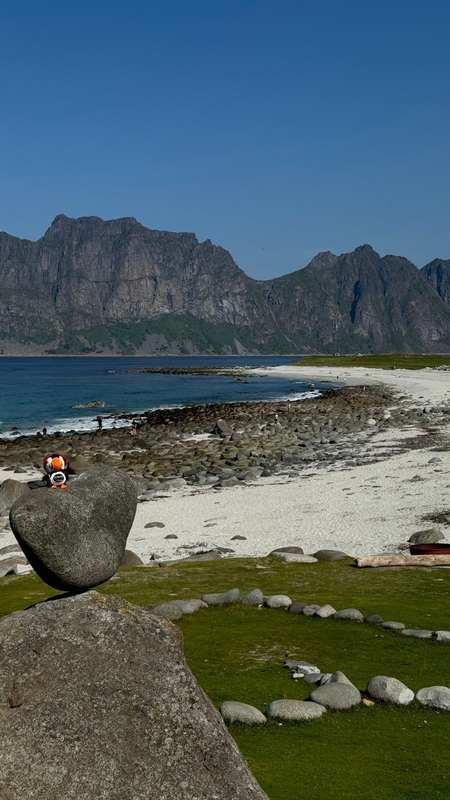
Plenty. Walk the beach — pale sand and black boulders, wide horizon, surfers as the foreground of any photo if conditions are on. The small café at Unstad Arctic Surf is open to non-guests for food and coffee. The bay is a striking photo stop in any season, and it pairs naturally with the broader Vestvågøy loop — continue along the road to the spectacular Eggum coast a short way further on.
Where can you stay or eat at Unstad Beach?
On the beach itself, Unstad Arctic Surf rents beachfront cabins and runs a small café open to non-guests. There is also a camping/campervan area at the surf site for overnight stays — note that while day parking is free, overnight camping there costs around 200 NOK. For more variety, Leknes — 25 minutes back along the E10 — is the nearest larger town with full-service hotels, restaurants and a supermarket.
About Unstad Beach
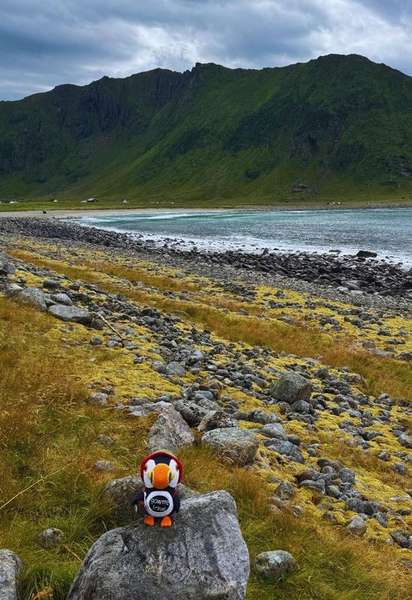
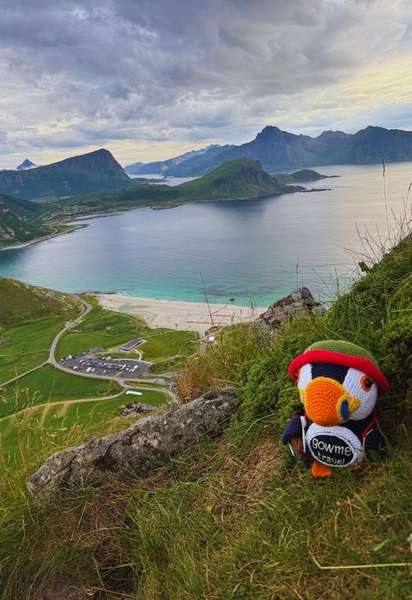
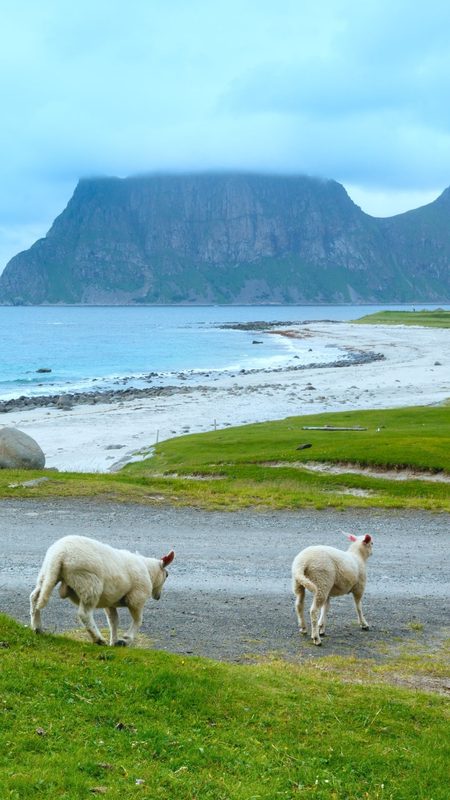
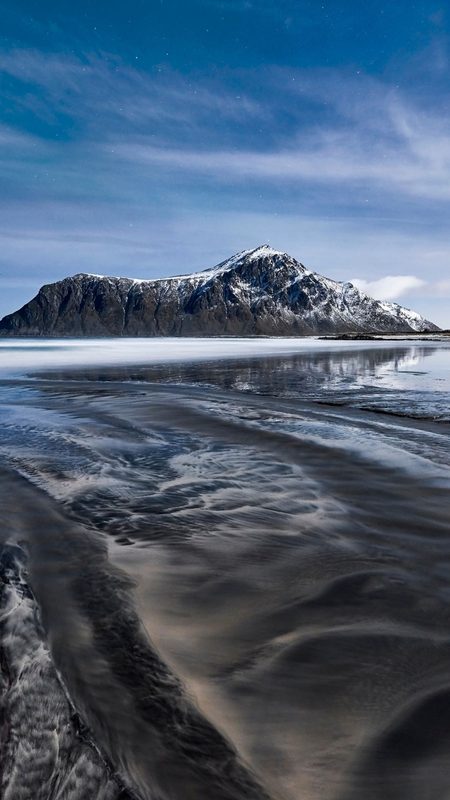
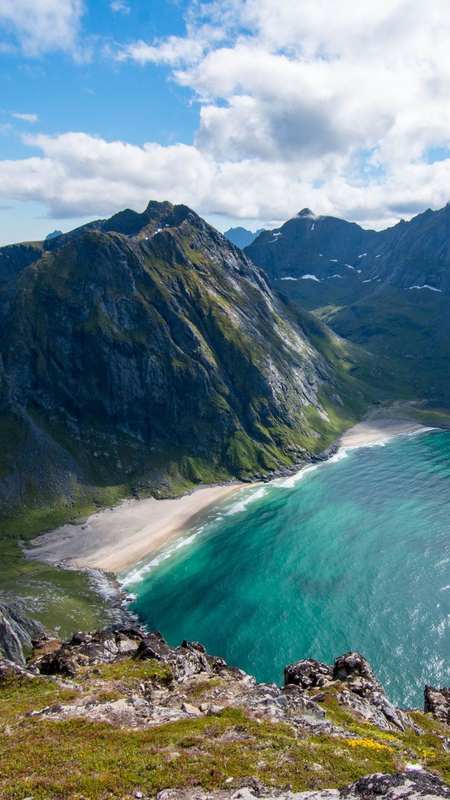
Unstad Beach (Unstadstranda) is one of the most unusual beaches in Lofoten. It is not the postcard turquoise-sand bay of Haukland, not the boulder-strewn photographer's playground of Uttakleiv — it is the cultural and operational home of cold-water Arctic surfing in Norway. Pale sand, black boulders, very cold turquoise water and the low constant rumble of Atlantic swell. People fly in from across Europe specifically to surf here at 68° north.
Surfing at Unstad
Our own drone footage from Unstad — cold-water surfers riding the bay under the Lofoten mountains.
Unstad has waves because of where it sits — a north-west-facing bay open to the Atlantic, catching swells from the west and the north — so depending on conditions, different parts of the beach break differently. It is Lofoten's best-known and one of its most consistent surf beaches (Flakstad, further south, is the other surf spot in the islands, and a gentler option for beginners), and one of the very few places this far north in the world where you can find rideable waves year-round. The surf community here has been growing since the 1960s, when the first locals started experimenting in the cold water.
Cold-water surfing — what to expect
This is not a warm-water beach. Sea temperature ranges roughly 5–12 °C, cold even at the height of summer. To surf you need a 5–6 mm full wetsuit, a neoprene hood, gloves and booties. First-time cold-water surfers are far better off renting the full kit on site than trying to bring their own — the difference between a properly fitted Arctic suit and a cobbled-together one is the difference between an enjoyable lesson and hypothermia.
Unstad Arctic Surf — lessons, rentals and sauna
The only operator on the beach is Unstad Arctic Surf — a surf school that runs lessons, rentals, beachfront cabins, a sauna and a small café right on the bay. Group lessons for beginners run daily in season and they include the full kit; private lessons and multi-day packages are also available. If you are coming specifically to surf, book lessons or rentals in advance, especially in summer and during the autumn swell season.
How to get there and where to park
Unstad is signposted from the E10 on Vestvågøy — turn off onto the side road that winds through farmland to the bay. From Leknes it's roughly a 25-minute drive. The parking at the surf school is free, with space for a few cars and campervans right by the bay. The lot fills up on summer afternoons, so arrive earlier in the day if you can.
When to come
Unstad surfs year-round and each season has its character. Summer (June–August): long days, the midnight sun keeps the bay light around the clock, milder air, smaller more beginner-friendly waves and the busiest crowd. Autumn (September–November): the best, biggest swell of the year, when serious surfers come — also when most of the famous Arctic-surf photography is made. Winter (December–March): the Arctic-surf-in-snow image people fly in for — snow on the dunes, aurora above, often heavy swell, very cold. Spring (April–May): the quietest season, surfable but inconsistent.
Beyond surf — visiting Unstad as a non-surfer
Our own footage of a beach run along Unstad — what the bay is like if you're not in the water with the surfers.
You don't have to surf to enjoy Unstad. The beach is a great walk in any season — pale sand and black boulders, the bay's wide horizon, surfers in the water for the photo if conditions are on. The little café at the surf school is open to non-guests for food and coffee. Unstad pairs naturally with the broader Vestvågøy loop — continue along the road to the spectacular Eggum coast and viewpoint a short way further on, or come back down to the famous beach pair at Haukland and Uttakleiv.
9-day weather forecast — Unstad Beach, Leknes
Loading forecast…
⚡ Mountain weather changes fast. This is an automated forecast from MET Norway — not a personal recommendation. Check yr.no and use your own judgement before you head out.
Did you know?
Unstad is one of the world's most northern surf beaches — at 68° N, well inside the Arctic Circle.
Unstad Arctic Surf, the only operator on the beach, runs lessons, rentals, beachfront cabins and a sauna right on the bay.
Cold-water surfing at Unstad needs a full 5–6 mm wetsuit with hood, gloves and booties even in midsummer — sea temperatures stay roughly 5–12 °C year-round.
Practical tips
Wetsuit gear: rent the full kit (5–6 mm wetsuit, hood, gloves, booties) from Unstad Arctic Surf on site. Don't bring half a kit — Arctic water needs proper insulation.
Parking: free at the surf school lot, right by the bay. Space is limited and fills early in peak summer.
Lessons and rentals: book in advance through Unstad Arctic Surf, especially in summer and autumn swell season. Beginner group lessons include the full kit.
Stay and eat: cabins at Unstad Arctic Surf right on the beach, plus a small café open to non-guests. Day parking is free, but staying overnight is different — there is a camping/campervan area at the surf site, and overnight camping there costs around 200 NOK (separate from the free day parking).
Combine the trip: pair Unstad with Haukland Beach and Uttakleiv down the coast for three very different Lofoten beaches in one day, with the Mannen hike between Haukland and Uttakleiv for the high view. Further along the Lofoten loop: Henningsvær, Reine and historic Nusfjord.
Fluffy™ Norway Trip Planner is built for one thing: turning a messy "somewhere in Norway" idea into a clear route you can actually follow. Tell Fluffy when you're traveling, who you're with, how active you want to be – and the planner curates a custom mix of fjords, viewpoints, easy walks and bigger adventures.
Whether you're starting with classic Oslo attractions and day trips from Oslo, flying to Bergen for some Bergen sightseeing, or chasing the northern lights around Tromsø, Bodø, Narvik or Alta, the planner connects it all into one route. Road-tripping through western Norway around Aurland, Gudvangen, Loen, Olden, Voss and Stryn? Hopping between islands in Lofoten – Svolvær, Leknes, Å i Lofoten, Henningsvær, Hamnøy? Or mixing cities like Stavanger, Trondheim, Kristiansand and Lillehammer with quiet fjord villages? Fluffy keeps the puzzle pieces in order.
After five quick steps, you get a personalized map of Norway with recommended places across northern, western and southern Norway – sent straight to Google Maps. Open it on your phone, tick off spots as you go, and adjust on the fly. You bring the curiosity; Fluffy brings the map.